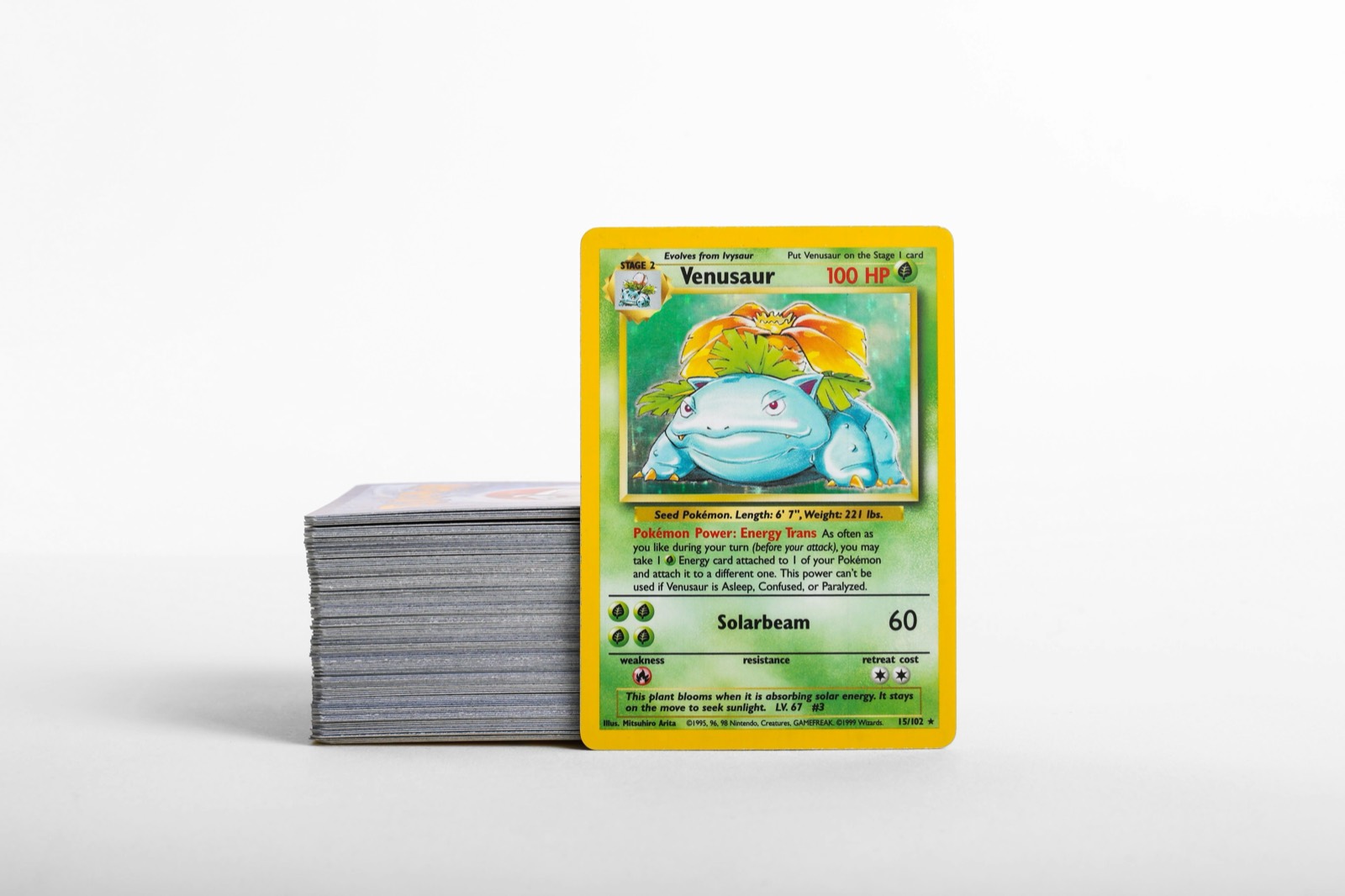
Holo swirls are a collector detail, not a separate card type
A Pokemon card swirl is a visible spiral pattern in the holofoil layer. It is part of the foil sheet, not a printed symbol or official rarity tier. That makes swirls fun to collect, but also easy to overstate. The card is still the same card; the swirl is a desirable visual feature on a specific copy.
Collectors usually care about swirls because they add character, photograph well, and make one copy feel more display-worthy than another.
Where holo swirls appear
Swirls are most associated with older holo patterns and some promo or vintage-era cards. They can appear in different positions depending on how the foil sheet lined up under the printed artwork.
The details collectors notice most:
- Full or partial swirl visibility
- Placement near the Pokemon, attack box, or open background
- Whether the swirl is clean or hidden under dark art
- How strong the holo pattern looks in light
- Whether the card already has nostalgia or character demand
The Pokemon card holo types guide explains the broader foil categories that swirls belong to.
Does a swirl make a Pokemon card more valuable
Sometimes, but not always. A swirl can make a strong card easier to sell or help one copy stand out in a group of similar listings. It rarely turns an ordinary card into a high-end card by itself.
Swirl premiums are strongest when:
- The base card already has demand
- The swirl is obvious in photos
- Placement is visually appealing
- Condition is strong
- Comparable swirl listings show buyers paying extra
If the swirl is faint, badly placed, or only visible under perfect lighting, the premium may be small.
How to photograph a holo swirl
Swirls disappear in flat lighting. The goal is to show the feature honestly without hiding condition flaws. Use angled light, avoid harsh glare, and include both a full-card photo and a close-up.
Good listing photos usually include:
- Straight-on front and back
- Angled holo photo showing the swirl
- Close-up of the swirl area
- Surface photo that shows scratches honestly
- Normal condition photos for corners and edges
The how to photograph Pokemon card condition guide covers the same setup from a selling perspective.
Swirl vs damage vs print feature
A swirl is not damage. It is also not a separate official variant in most cases. That means your inventory should treat it as copy-level detail: same card identity, special note on that copy.
This matters if you own multiple duplicates. One copy may be near mint with a clean swirl. Another may be the same set number without a swirl. They should not be priced or displayed as identical if buyers care about the feature.
How to track swirl cards
Record the base card normally, then add a note such as "visible holo swirl near right edge" or "partial swirl behind artwork." Keep photos attached if your tracker supports them. If you are building a display binder, tag swirl copies so you can find them again without resleeving every duplicate.
A Pokemon card scanner helps confirm the base identity quickly, while copy-level notes in a Pokemon collection app preserve the swirl detail.
The simple rule
A Pokemon card swirl can make one copy more appealing, but it does not replace card identity, condition, or real comps. Treat the swirl as a copy-level visual feature, photograph it clearly, and only price a premium when buyers have shown they care about that card with that placement.