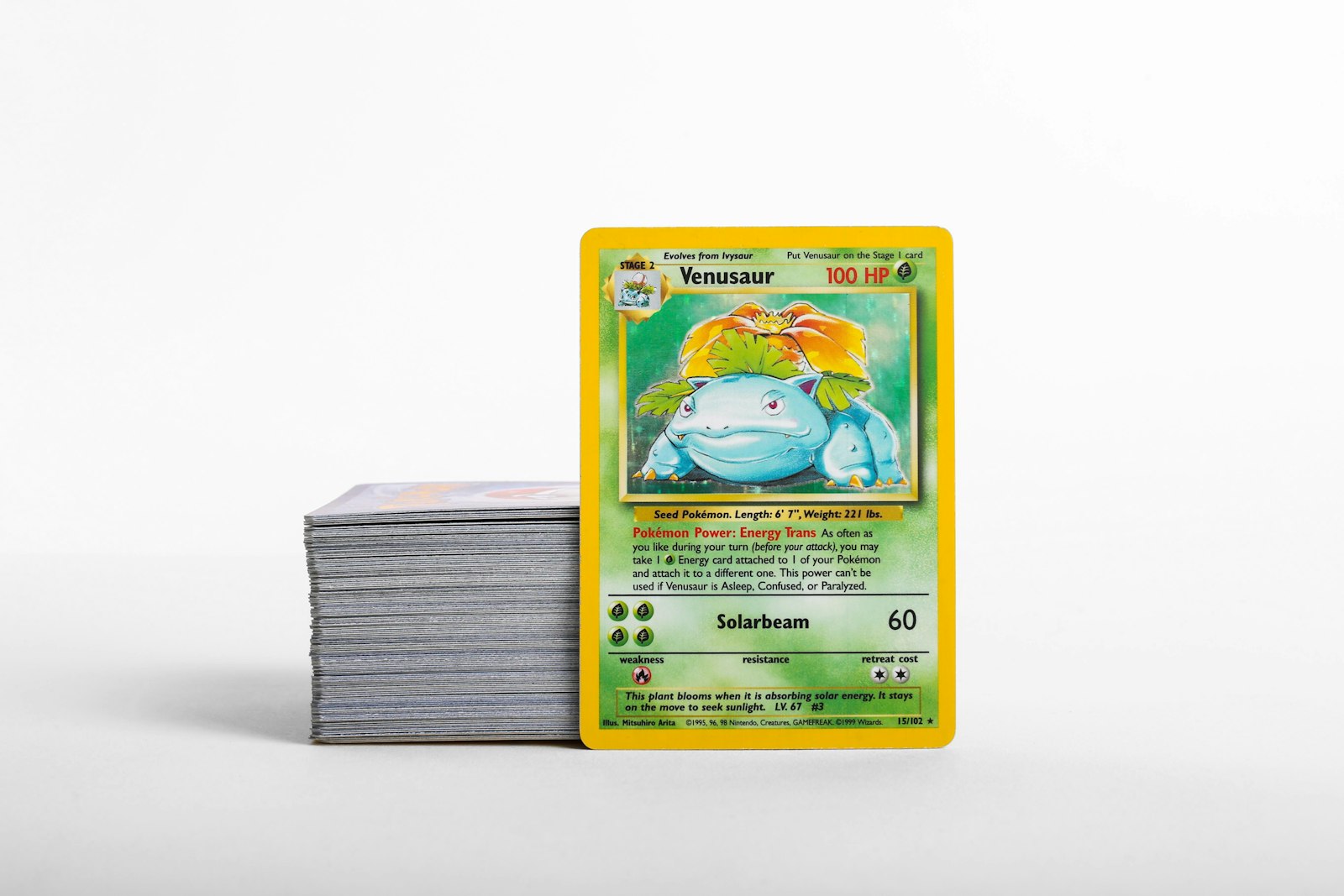
Every Pokemon collector eventually faces the same dilemma: a growing stack of cards sitting on a desk, waiting to be sorted. Without a clear system, valuable holo cards can end up mixed with common bulk, risking surface scratches and edge wear. On the flip side, spending premium storage dollars on low-value cards quickly drains your collecting budget.
To preserve your collection's physical integrity and financial value, you must establish a systematic storage framework. By grouping your cards into distinct tiers based on raw physical condition and market rarity, you can allocate your protective gear where it is needed most. Here is how to segment your Pokemon card storage using a practical, condition-first approach.
The Three Core Storage Tiers
Before you start sorting, you need to define the physical destinations for your cards. A successful storage system relies on three primary tiers, each offering a different balance of protection, accessibility, and cost.
- Tier 1: Bulk Storage Boxes (Low Cost, High Capacity)
- Tier 2: Binder Storage (Moderate Cost, High Visibility)
- Tier 3: Rigid Protection (High Cost, Maximum Security)
This tier is designed for commons, uncommons, and non-holo rares that carry minimal market value. Standard cardboard storage boxes (such as 800-count or 3,200-count monster boxes) are ideal here. Cards are stored raw or in simple penny sleeves, packed snugly but not tightly to prevent warping.
Binders are perfect for complete sets, playable deck staples, and mid-range holo cards. A quality side-loading binder with built-in page backing protects cards from dust and friction while allowing you to easily browse your collection.
This tier is reserved for your most valuable singles, high-end chase cards, and grading candidates. Every card in this category should be double-sleeved (using an inner sleeve and a standard deck sleeve) and housed inside a rigid toploader or a magnetic one-touch case.
Step 1: Evaluate Physical Wear to Filter Your Cards
Card condition is the most critical factor when deciding where a card should live. Even a historically valuable card loses its premium status if it has suffered severe environmental damage.
When evaluating your cards, look closely at the edges, corners, and surface. A card with crisp corners and zero surface scratches belongs in a protective binder or a toploader to preserve its pristine state. Conversely, if a card has visible whitening on the back edges, minor creases, or heavy surface scratching, its potential market value drops significantly.
Before spending money on premium binders or heavy-duty storage boxes, it is crucial to understand the value of what you own. Using a Pokemon card price checker can help you establish a baseline valuation, allowing you to match the card's current condition with its market relevance.
Step 2: Establish Your Rarity and Value Thresholds
Once you understand how to evaluate physical wear, you must combine that knowledge with rarity to make efficient storage decisions. Not every holographic card deserves a toploader, and not every common card belongs in a bulk box.
To keep your storage costs reasonable, establish clear rules for each tier:
- Toploader Candidates: Any card with a market value above a specific threshold (for example, $15 or $20) in Near Mint condition. This includes secret rares, alternate arts, and vintage holos.
- Binder Candidates: Complete set runs, classic holographic cards valued under your toploader threshold, and pristine copies of your favorite artwork.
- Bulk Box Candidates: Non-foil commons, uncommons, basic energies, and duplicate holographic cards that hold minimal trade or play value.
By drawing these hard lines, you avoid the trap of "over-protecting" low-value cards, which saves physical space and frees up budget for high-quality sleeves and binders.
Step 3: Implement a Double-Sleeving Protocol for Premium Cards
For cards routed to Tier 3 (toploaders and magnetic cases), standard protection is not enough. Dust particles can still find their way inside a toploader, causing micro-scratches on the card's surface over time.
To prevent this, use a double-sleeving routine:
- Insert the card into a perfect-fit inner sleeve from the top down. The card should be fully covered, with the open end of the sleeve at the bottom edge of the card.
- Slide the inner-sleeved card into a standard penny sleeve or deck protector from the bottom up. This creates an airtight seal, protecting the card from moisture, dust, and friction.
- Place the double-sleeved card into a clean toploader. Gently tap the bottom of the toploader on a flat surface to slide the card in completely; never force it down with your fingers, as this can damage the top edge of the card.
Step 4: Streamline Your Intake with a Digital Tracker
Sorting and protecting your cards physically is only half the battle. If you do not keep track of where those cards are stored, you will find yourself flipping through dozens of binder pages and bulk boxes just to find a single card for a trade.
To make this process seamless, many collectors use a Pokemon collection app to record card conditions alongside their physical locations. When you catalog your inventory digitally, you can assign custom tags or notes to each card, indicating whether it sits in your "Trade Binder," "Toploader Box 1," or "Base Set Master Binder."
Instead of manually typing out card names and set numbers during your intake process, utilizing a Pokemon card scanner allows you to quickly identify your cards, check their current market trends, and log them into your digital library before placing them in their permanent physical homes.
Step 5: Maintain Your Storage Environment
Even the best sleeves and binders cannot protect your cards if your storage environment is unsafe. Paper and cardboard are highly sensitive to temperature fluctuations and humidity.
Keep your storage boxes and binders in a climate-controlled room, away from direct sunlight, vents, and damp basements. High humidity causes holographic cards to warp or curl, while direct sunlight fades the vibrant ink on both vintage and modern cards. Store your binders upright rather than stacking them flat on top of each other, as heavy pressure can cause "ring damage" on the cards closest to the metal prongs.
Protect Your Collection Safely with PokeSnap
Organizing your Pokemon cards by condition and rarity ensures that your collection remains protected, organized, and easy to enjoy. By matching physical wear to the appropriate storage tier, you protect your cards from avoidable damage while keeping your supplies budget under control.
Ready to simplify your sorting process? Download PokeSnap today to scan your cards instantly, check up-to-date market values, and organize your entire collection digitally. Keep your physical binders and digital inventory perfectly in sync with PokeSnap.