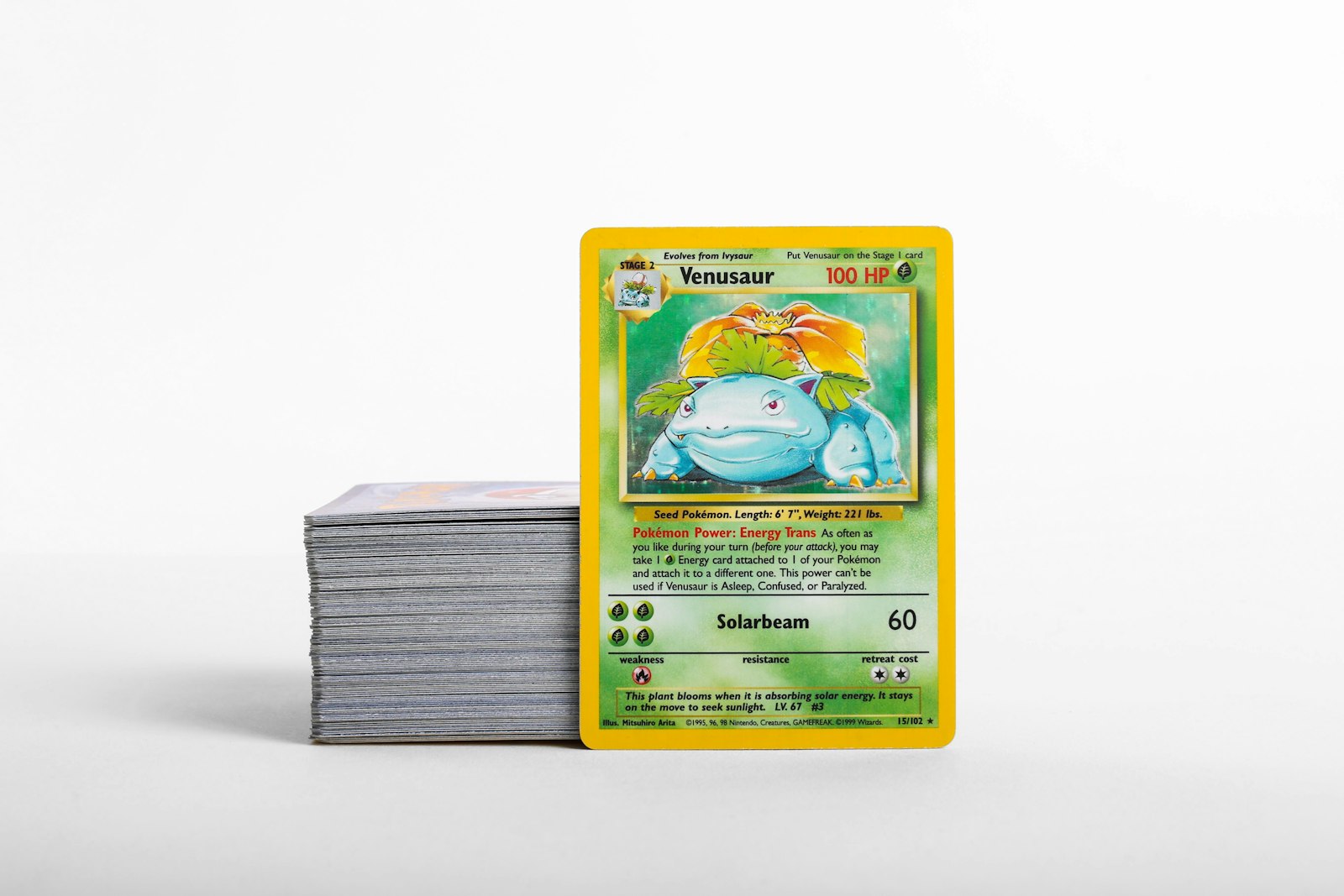
Storing raw Pokemon cards requires matching each card's specific vulnerability to the correct protective gear. Sliding a raw holo into a loose binder pocket or forcing a thick card into a tight sleeve can create micro-scratching, corner dings, or edge whitening before you ever get a chance to trade or list it.
By categorizing your raw cards by condition, foil type, and potential handling frequency, you can build a low-friction storage routine that preserves condition and eliminates unnecessary gear costs.
Step 1: Inspect Surface, Edges, and Foil Under Direct Light
Before deciding whether a card belongs in a penny sleeve, side-loading binder, or rigid toploader, inspect the physical copy under flat, direct white light. Tilt the surface to spot defects that are easily missed under warm room lighting:
- Surface Flaws: Check for light scratches, print lines, or dull patches on textured full-art cards and classic holofoil surfaces.
- Edge and Corner Wear: Look for minor whitening along the back borders, tiny corner nicks, or slight edge roughing from factory cuts.
- Foil Vulnerability: Holo cards, especially vintage prints and textured modern secret rares, attract dust and moisture faster than standard non-holo bulk.
Catching subtle wear early prevents you from pairing damaged sleeves with pristine hits or forcing cards into holders that put pressure on weakened edges.
Step 2: Select the Right Inner Protection (Penny Sleeves vs. Perfect Fits)
Every raw card needs a primary barrier against dust, skin oils, and atmospheric moisture. However, choosing the wrong sleeve type can cause immediate edge wear.
- Standard Archival Penny Sleeves: The safest all-around choice for raw singles, binder storage, and cards waiting for pricing reviews. The loose fit allows the card to slide in effortlessly without catching corners.
- Exact-Fit / Perfect-Fit Sleeves: Best reserved for double-sleeving valuable hits when pairing with side-loading binder pages or toploaders. Always feed the card carefully from the top down to ensure corners do not snag against the tight polymer seams.
- Textured / Matte Back Sleeves: Great for cards stored in play decks or frequently handled trade binders, but avoid ultra-tight glossy inner sleeves that compress card edges over extended periods.
Never force a card into a sleeve if you feel resistance. If the card hesitates at the opening, inspect the sleeve corner for static friction or manufacturing defects.
Step 3: Match Protection Gear to Card Value and Condition Tiers
Not every raw single requires a heavy-duty magnetic case, just as valuable full arts should never sit raw in a cardboard sorting box. Categorize your cards into clear physical storage tiers:
Tier 1: High-Value Singles and Mint-Condition Hits
- Gear: Soft penny sleeve inserted into a clean 3" x 4" rigid toploader or semi-rigid holder.
- Orientation: Insert the card sleeve-first from the top down, with the sleeve opening facing downward inside the toploader to seal out ambient dust.
Tier 2: Binder Copies, Set Staples, and Mid-Tier Holos
- Gear: Archival-safe, PVC-free side-loading binder pages with double-sided pockets.
- Setup: Pair with standard soft sleeves. Side-loading pockets prevent dust accumulation from above and stop cards from slipping out during transport.
Tier 3: Unsorted Duplicates and Playable Bulk
- Gear: Acid-free card storage boxes (800-count or 3200-count monster boxes).
- Setup: Group holos and reverse holos in penny sleeves before placing them into rows. Use rigid plastic dividers to keep stacks upright without applying excessive lateral pressure.
Step 4: Control Moisture, Humidity, and Foil Curl
Humidity swings are the primary cause of foil bending and page warping in Pokemon card collections. Foil layers absorb moisture differently than the underlying paper stock, creating natural inward or outward curls.
- Maintain Room Climate: Keep your storage area between 45% and 55% relative humidity at stable room temperatures.
- Use Silica Packets: Place food-grade silica gel packets inside sealed storage boxes and binder storage bins to absorb excess ambient moisture.
- Avoid Ring Binder Compression: Standard D-ring or O-ring binders can pinch cards near the spine if pages overflow. Stick to ringless, bound side-loading portfolio binders for all foil sets.
If you collect international prints alongside domestic releases, remember that surface textures can react differently to environmental exposure. You can quickly double-check set symbols and print origins using a specialized tool to scan Japanese Pokemon cards before grouping them into climate-controlled storage boxes.
Step 5: Establish a Regular Storage Refresh and Quality Audit Routine
Protective gear degrades over time. Polypropylene sleeves can attract environmental haze, dust debris, and finger oils that obscure card clarity.
Set up a periodic audit routine to clean up your storage setup:
- Inspect Sleeve Haze: Replace sleeves that show surface cloudiness, scuffs, or corner bending.
- Clean Storage Cases: Swap out scratched toploaders that obscure your ability to verify card condition.
- Rebalance Binder Pages: Reorganize overcrowded binder pages before pockets stretch out permanently.
Keeping your storage gear fresh ensures that when you cross-reference your collection with a Pokemon card price checker, your raw cards remain in exact mint-to-near-mint shape.
Step 6: Connect Physical Storage to a Digital Inventory
A disciplined storage setup works best when your physical collection maps directly to a digital record. Knowing exactly which binder, toploader box, or bulk row holds a specific copy saves hours of manual searching during trades or set completion pushes.
Instead of flipping through dozens of binder pages to check set progress or duplicate counts, use a high-speed Pokemon card scanner to catalog your raw hits as you sleeve them.
With PokeSnap, you can identify singles instantly, log card conditions, track set completion gaps, and manage your growing binder layout directly from your phone. Download our Pokemon collection app today to build an organized digital catalog that keeps pace with your physical storage system, or explore more organizing routines on our collector blog.