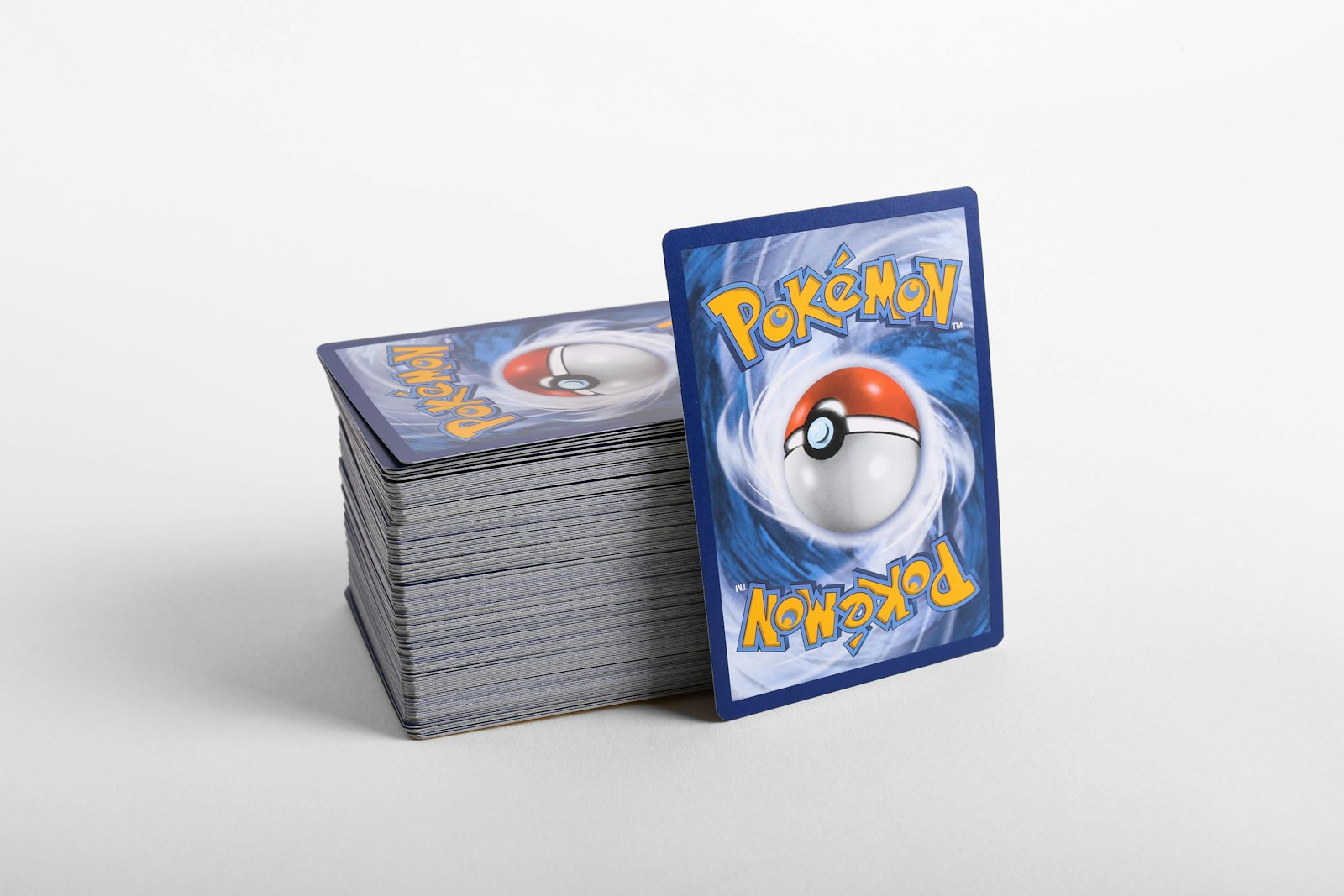
Storage boxes are an inventory decision, not just a container
The right Pokemon card storage box depends on what is going inside it. Bulk commons, sleeved singles, top loaders, and graded slabs all have different shapes, weights, and protection needs. Picking the wrong box does not just look messy — it actively damages cards over time through warping, pressure, and dust.
A working storage system uses different boxes for different jobs, and treats the environment around the box as part of the storage decision.
Bulk and sorting: monster boxes, shoeboxes, and dividers
For bulk commons and uncommons, the priority is volume, accessibility, and cheap protection.
Common formats:
- 800-count, 1600-count, 3200-count, and 5000-count monster boxes
- Reinforced cardboard shoeboxes for medium bulk
- Plastic clip-top sort boxes for active sorting sessions
Useful habits:
- Use index dividers to separate sets, languages, or rarities
- Keep cards upright, never piled flat in tall stacks
- Avoid overfilling — overstuffed boxes warp the cards near the wall
- Label the box with content type, date, and rough count
The how to organize Pokemon card bulk for selling and Pokemon card lot sorting system guides cover the sorting workflow that pairs with these boxes.
Single-card storage: top loaders inside larger boxes
Sleeved singles in top loaders are the next tier. They need a box that holds them upright without crushing.
Practical setups:
- Card savers and top loaders stored upright in shoebox-sized plastic bins
- Reinforced top loader boxes designed for 100+ top loaders
- Drawer organizers with vertical slots for fast access
Things to avoid:
- Stacking top loaders flat in tall piles — corners bend over time
- Mixing top loaders with loose cards in the same box
- Wedging top loaders so tight that the sleeves crease
The Pokemon card sleeve types guide covers the sleeve and top loader combination that lives inside these boxes.
Graded slab storage: dedicated slab boxes
Graded cards need boxes specifically built for slab dimensions. Standard PSA, BGS, and CGC slabs fit most slab boxes, but the safest setup uses boxes from a reputable storage brand.
Useful practices:
- Store slabs upright, not stacked flat
- Use foam or felt dividers between slabs to absorb shock
- Avoid mixing slabs from different graders without dividers — different slab heights cause uneven pressure
- Label the box with the contents and total declared value for insurance reference
The Pokemon card insurance inventory guide covers how to keep slab values documented alongside this storage.
Sealed product: long boxes, plastic bins, and shelf storage
Sealed boosters, ETBs, and booster boxes deserve their own storage. They are heavier, larger, and more sensitive to crushing than singles.
Storage tips:
- Store sealed product flat or upright, depending on product type, but consistent within a stack
- Avoid stacking heavy items on top of ETBs or booster boxes
- Use plastic bins with lids if the storage space is exposed to dust
- Keep sealed product out of direct sunlight to protect printed packaging
The Pokemon sealed product condition guide, how to track sealed Pokemon products, and Pokemon card Elite Trainer Box value guide all assume the sealed inventory is being stored well.
Environment: the boxes do not solve everything
Even the best box cannot fix a bad environment. The room around the storage matters at least as much as the box itself.
Aim for:
- Stable temperature, ideally between 18 and 22 degrees Celsius
- Relative humidity between 40 and 55 percent
- No direct sun on the storage area
- Low dust levels and minimal foot traffic kicking up debris
- No exterior wall placement in damp climates
The Pokemon card humidity guide covers the humidity range in more detail, and the Pokemon card collection backup guide covers how to protect the inventory record even if the physical storage is compromised.
Tag every box with content, not just count
A collector's storage stops being useful when the contents of each box are unknown. Each box should have:
- A short content label (set, rarity, language, or grading status)
- A date the box was filled or last reorganized
- An approximate count
- A reference to the matching inventory entry
The Pokemon card collection tracker guide, Pokemon card inventory template, and Pokemon card insurance inventory guide cover the inventory side of this pairing.
Plan the storage growth before it grows
A common mistake is buying one type of box and trying to make it serve every purpose. Bulk in slab boxes, top loaders in monster boxes, and slabs stacked flat are all symptoms of the same planning gap.
A simple planning checklist:
- Estimate how many cards you have in each category (bulk, sleeved singles, top loaders, slabs, sealed)
- Pick the right box format per category
- Decide where the storage lives at home — and whether the environment is acceptable
- Leave room to grow each category by at least 30 percent before reorganizing
The how to move a Pokemon card collection guide covers what happens when storage is not planned and you have to redo it under time pressure.
The simple rule
A Pokemon card storage box system works when each box matches the cards inside it and the environment around the box stays stable. Use bulk boxes for bulk, top loader boxes for sleeved singles, slab boxes for graded cards, and dedicated bins for sealed product. Label every box, check humidity and temperature, and grow the system intentionally so a future you can still find any card without dismantling the whole collection.