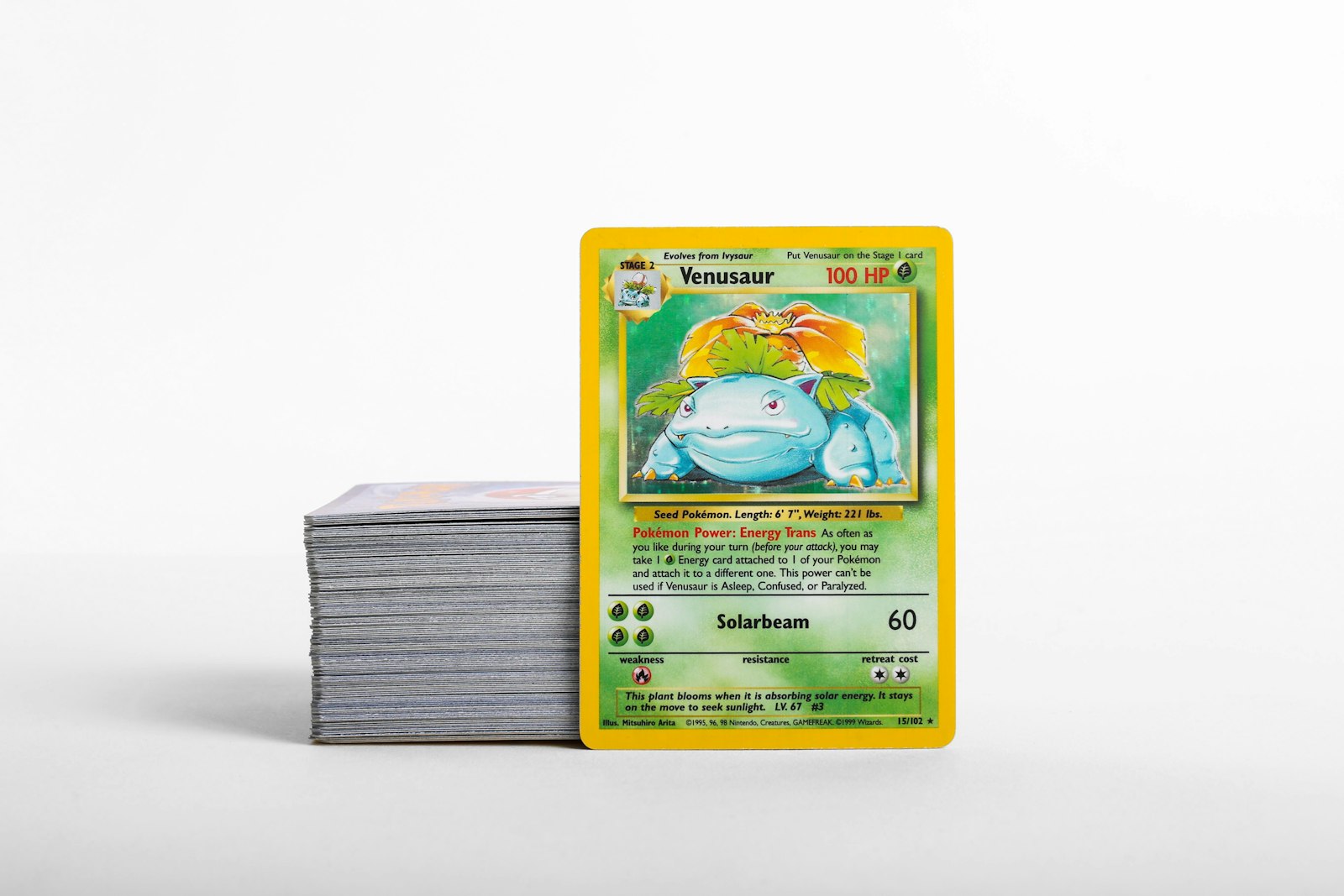
Every Pokemon card collector eventually faces a mountain of raw cards and a critical question: How should I store these?
It is easy to get caught up in the hype of premium acrylic cases, heavy-duty binders, and specialized grading sleeves. However, treating every single pull like a pristine vintage card is a quick way to empty your wallet on storage supplies. A smart storage strategy is not about buying the most expensive gear for every card; it is about matching the card’s physical condition and rarity to the exact level of protection it requires.
By aligning your storage decisions with the actual condition of your cards, you preserve their current state, save physical space, and keep your collecting budget focused on what matters most—the cards themselves.
1. Why Card Condition Dictates Your Storage Strategy
Card condition is the primary factor that determines how a card should be handled and stored. A card in Near Mint (NM) or Mint condition has everything to lose. Even minor friction inside a binder pocket or a tiny speck of dust trapped in a sleeve can cause surface scratches or corner whitening, dropping its grade and long-term appeal.
Conversely, a card that is already in Moderately Played (MP) or Heavily Played (HP) condition has different preservation needs. While you still want to prevent further degradation, you do not need to isolate it in a rigid magnetic case. Understanding this spectrum allows you to allocate your best protective gear where it will actually make a difference.
Before you purchase any binders, top loaders, or storage boxes, you must assess what you currently have. Sorting your cards by condition allows you to group them into clear protection categories.
2. Evaluating Condition Before You Protect
To make smart storage decisions, you need to know exactly what you are protecting. Assessing your cards under a bright, direct light source is the best way to identify hidden flaws.
When evaluating a card, look closely at these four key areas:
- Centering: While centering does not change with storage, it helps you identify top-tier copies that might be worth extra physical protection.
- Corners: Look for fraying, splitting layers, or white spots on both the front and back.
- Edges: Run your eyes along the borders to check for silvering (on older cards), chipping, or tiny dents.
- Surface: Tilt the card under a light to check for print lines, scratches, cloudiness, or dirt buildup.
To make this process faster and more organized, using a pokemon card scanner can help you quickly identify the card, while visual inspection helps you log its physical state. Once you know if a card is pristine or already shows signs of wear, you can place it into the correct storage tier.
3. Tier 1: High-Value and Near Mint Cards
Cards in this tier are your prize pulls, secret rares, vintage holos, and any card you want to keep in absolutely flawless condition. These cards require multi-layered protection to eliminate movement and shield them from environmental hazards.
For Tier 1 cards, use the following combination:
- Perfect-Fit Sleeve: This sleeve fits snugly around the card, preventing dust from slipping inside and protecting the edges from direct contact.
- Standard Penny Sleeve: Slide the perfect-fit sleeved card upside down into a standard penny sleeve (double-sleeving) to create a water-resistant seal.
- Top Loader or Semi-Rigid Holder: Insert the double-sleeved card into a rigid top loader. This prevents bending, warping, and corner impact if the card is handled or accidentally dropped.
If you have ultra-premium raw cards that you want to display on a shelf, a magnetic one-touch case is an excellent alternative to a top loader, provided you use a perfect-fit sleeve designed to prevent the card from shifting inside the hard plastic.
4. Tier 2: Binder Candidates (Excellent to Lightly Played)
Not every valuable card needs to be locked away in a rigid plastic top loader. Many collectors prefer the clean, readable look of a binder. Binder storage is ideal for complete sets, mid-value holos, and clean, Lightly Played (LP) cards that you want to browse frequently.
To keep binder cards safe, observe these rules:
- Always Sleeve First: Never put a raw card directly into a binder page. Even a standard penny sleeve provides enough slickness to let the card slide into the pocket without catching on the edges.
- Use Side-Loading Pages: Avoid top-loading binder pages. Side-loading pockets hold cards securely and prevent them from falling out when the binder is carried or turned upside down.
- Avoid Ring Binders: Standard O-ring binders are notorious for causing "ring denting" on the cards closest to the metal spine. Instead, opt for strap-closed, archival-safe, ringless binders with built-in pages.
By keeping your clean binder copies sleeved and flat, you ensure they remain in great shape without the bulky footprint of individual top loaders.
5. Tier 3: Played Cards, Non-Holos, and Bulk
Moderately Played (MP), Heavily Played (HP), and common non-holo cards do not require individual sleeving or binder slots. However, they still need to be stored in a way that prevents them from turning into a damaged, unsorted pile.
For bulk and played cards, your best option is a dedicated cardboard or plastic storage box designed specifically for trading cards.
- Group by Set or Rarity: Keep your bulk organized so you do not have to dig through thousands of cards to find a specific card later.
- Fill Empty Spaces: If a storage box is only half full, cards will slide, tilt, and bend. Use foam inserts or plastic dividers to keep the stacks upright and snug.
- Sleeve the Highlights: Even in a bulk box, minor rare cards or reverse holos should get a quick penny sleeve to prevent surface scratching from rubbing against neighboring cards.
6. Managing Your Protected Collection Digitally
Once your cards are safely tucked away in their respective sleeves, binders, and boxes, keeping track of where everything lives becomes the next challenge. It is incredibly easy to forget which binder holds your favorite holos or which storage box contains your older sets.
Using a modern pokemon collection app allows you to build a digital twin of your physical collection. You can log the exact condition of each card and add custom notes detailing its storage location (e.g., "Binder A, Page 4" or "Top Loader Box 2").
When you combine digital tracking with a reliable pokemon card price checker, you can easily monitor the value of your collection without constantly pulling cards out of their protective sleeves. This minimizes physical handling, which is one of the most common causes of accidental card wear.
Secure Your Collection with PokeSnap
Protecting your cards physically is only half the battle; keeping your inventory organized is the other. With PokeSnap, you can scan your cards in seconds to identify them, check their current market values, and catalog them by their exact condition.
Stop guessing what is in your binders and boxes. Download PokeSnap today on iOS or Android, and build a secure, organized, and beautifully tracked Pokemon card collection.