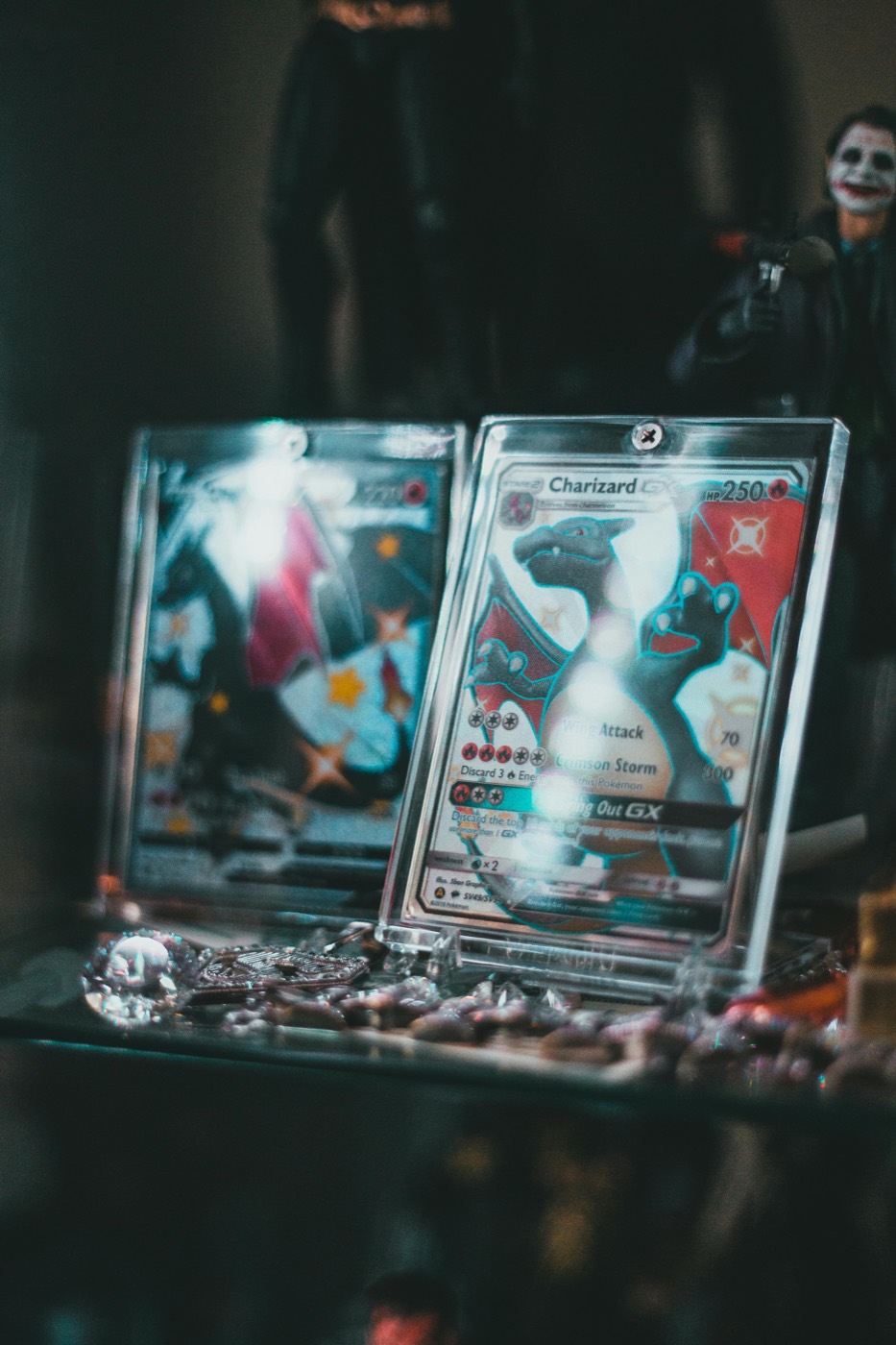
Most card damage happens in the first ten minutes
The popular image of card damage is something dramatic — a coffee spill, a kid in a bad mood, a bent corner from a careless trade. The reality is duller and more painful: most condition loss on pack-fresh cards happens between the moment the foil pack is open and the moment the card finally lands in a sleeve.
A Pokemon card pack-fresh handling guide is really a guide to those ten minutes. If you get that window right, grade-candidate copies stay grade-candidate. If you get it wrong, no amount of later storage will rebuild the centering, surface, and edges you lost on the kitchen table.
Build a clean opening station
Pack opening at a cluttered desk is the single biggest source of pack-fresh wear. The fix is not glamorous — it is a clean, dry surface with the supplies you need within reach.
A minimal opening station:
- A clean, smooth surface, ideally with a soft playmat
- Clean, dry hands — wash before, no lotion, no food residue
- Penny sleeves pre-loaded and oriented the right way
- Toploaders, deck boxes, or a temporary holding spot
- A pen-and-paper or app ready for immediate logging
The how to scan Pokemon cards without damaging them and how to catalog Pokemon cards after a pack opening cover the scan-and-log step that should follow handling — never let scanning be the moment a card first comes out of its sleeve.
Handle the pack itself with care
Damage often starts before the card is even visible. Tearing a foil pack roughly can ding the top card; squeezing a pack to feel a chase can press indents into the surface.
Handling the pack itself:
- Cut or tear the seal cleanly along the original edge
- Avoid bending the pack to peek at thickness or shapes
- Slide cards out as a stack, not individually pulled with friction
- Keep the empty wrapper out of the way of the cards
- Never set the pack on top of the cards once opened
The how to spot resealed Pokemon booster packs covers the upstream question of whether the pack was tampered with before you got it; once a sealed pack is in your hand, your job is to open it without adding the damage yourself.
Touch only the edges
Once cards are out, the single biggest habit shift is touching only the edges. Fingerprints on the holo surface are extremely difficult to fully clean, and the small oils from skin become more visible as cards age.
A clean handling rule of thumb:
- Pinch each card at the short edges
- Avoid sliding fingers across the surface, ever
- Do not stack cards face-to-face with no sleeves
- Lay cards down face-up rather than dragging them across surfaces
- Watch for any silent press from a watch, ring, or sleeve
The Pokemon card surface damage guide and Pokemon card edge wear guide cover the longer-term version of the same threats; pack-fresh handling is where most of these stories actually begin.
Sleeve immediately, then think later
Every minute a card sits unsleeved increases its risk. The pack-fresh workflow should sleeve first, and only then proceed to scanning, photographing, logging, or sorting.
The basic sequence:
- Pull the card from the stack at the edges
- Slide it into a penny sleeve oriented correctly
- Set it face-up in a holding spot
- Continue through the pack before processing further
The how to sleeve Pokemon cards covers the sleeve mechanics in detail; this guide is about making sure sleeving happens at the right moment, not waiting until the end of the session.
Match the second layer to the card's value
Not every pack-fresh card needs a magnetic case, and not every card is fine with just a penny sleeve. The pack-fresh workflow should triage cards within the first minute.
A simple triage:
- Bulk and commons: penny sleeve, into a temporary stack
- Notable singles: penny sleeve plus toploader
- Grade-candidate hits: penny sleeve plus toploader, then magnetic case as soon as practical
The Pokemon card toploader vs magnetic case guide and Pokemon card double sleeving guide cover the format choices in more depth; the pack-fresh window is when those choices have the most impact on long-term grade.
Avoid the table-flick reveal
The classic "spread the pack on the table to reveal the hit" is one of the most damaging social rituals in the hobby. Sliding cards across a surface adds micro-scratches; fanning them out with thumbs adds fingerprints; dragging them apart drags edges over each other.
If you want a satisfying reveal:
- Stack the pack and flip one card at a time
- Hold reveals over a soft playmat, never a wood or stone table
- Keep cards stacked, not fanned
- Pause the camera, not the handling, if you're filming
The how to scan Pokemon cards in low light and how to photograph Pokemon card condition cover the camera side; the handling side is what protects the grade for the next decade.
Inspect for factory defects right away
Some condition issues are not from handling — they came out of the pack that way. Identifying factory defects in the first session means you can decide what to do with the copy before it gets mixed into broader inventory.
Inspect for:
- Off-center printing
- Print lines or surface dimples
- Edge whitening from the cutting process
- Holo bubbles or pattern misalignment
- Foil scratches or fingerprints from manufacturing
The Pokemon card centering guide, how to check Pokemon card centering, and Pokemon card misprint guide cover what to actually look for and how to record what you find.
Log every pull before you move on
A pulled card that is not logged is a pulled card that gets confused with another copy later. The first minutes after the rip are the easiest time to capture what came out, in what condition, and into what storage spot.
A minimal log:
- Card name, set, collector number, language
- Pack-fresh condition note (NM, light edge whitening, etc.)
- Where the card landed (binder, box, magnetic case)
- Any factory defects you noticed
- The date and the box or pack source
The how to inventory Pokemon cards fast, how to digitize your Pokemon card collection, and how to organize Pokemon cards after a new set release cover the logging routines that match different collection sizes.
Send grade-candidate cards to a stable spot fast
The pack-fresh window is not where grade candidates should stay. As soon as a card is sleeved and toploaded, move it into a stable, dust-free environment.
For grade candidates specifically:
- Magnetic case as soon as practical, properly sized
- A dedicated drawer, not the kitchen counter
- Out of direct light, away from heat sources
- Logged in a way that you can find it without re-handling
The Pokemon card storage box guide, Pokemon card storage temperature guide, Pokemon card light damage guide, and Pokemon card heat damage guide cover the environment side; once a hit is safely housed, the storage rules are what keep it there.
A pack-fresh handling checklist
Before any pack opening session, confirm:
- Hands washed, surface clean, supplies ready?
- Sleeves and toploaders pre-staged in reach?
- Magnetic cases on hand for likely chase pulls?
- Logging tool open and ready?
During the session:
- Are cards only touched at the edges?
- Is sleeving happening immediately, not at the end?
- Are factory defects being noted as they appear?
- Is the table flick reveal staying off the table?
After the session:
- Has every card been logged?
- Have grade candidates moved into stable storage?
- Is bulk waiting in a clean, dry container?
The simple rule
Pack-fresh condition is not preserved by careful storage years later — it is preserved by careful handling in the first ten minutes after the foil opens. Clean station, edges-only handling, immediate sleeving, fast triage, and immediate logging are the cheap habits that quietly protect grade for the long run. Cards do not lose condition slowly; they usually lose it once, in a moment of distracted handling, and pack-fresh discipline is what keeps that moment from ever happening.