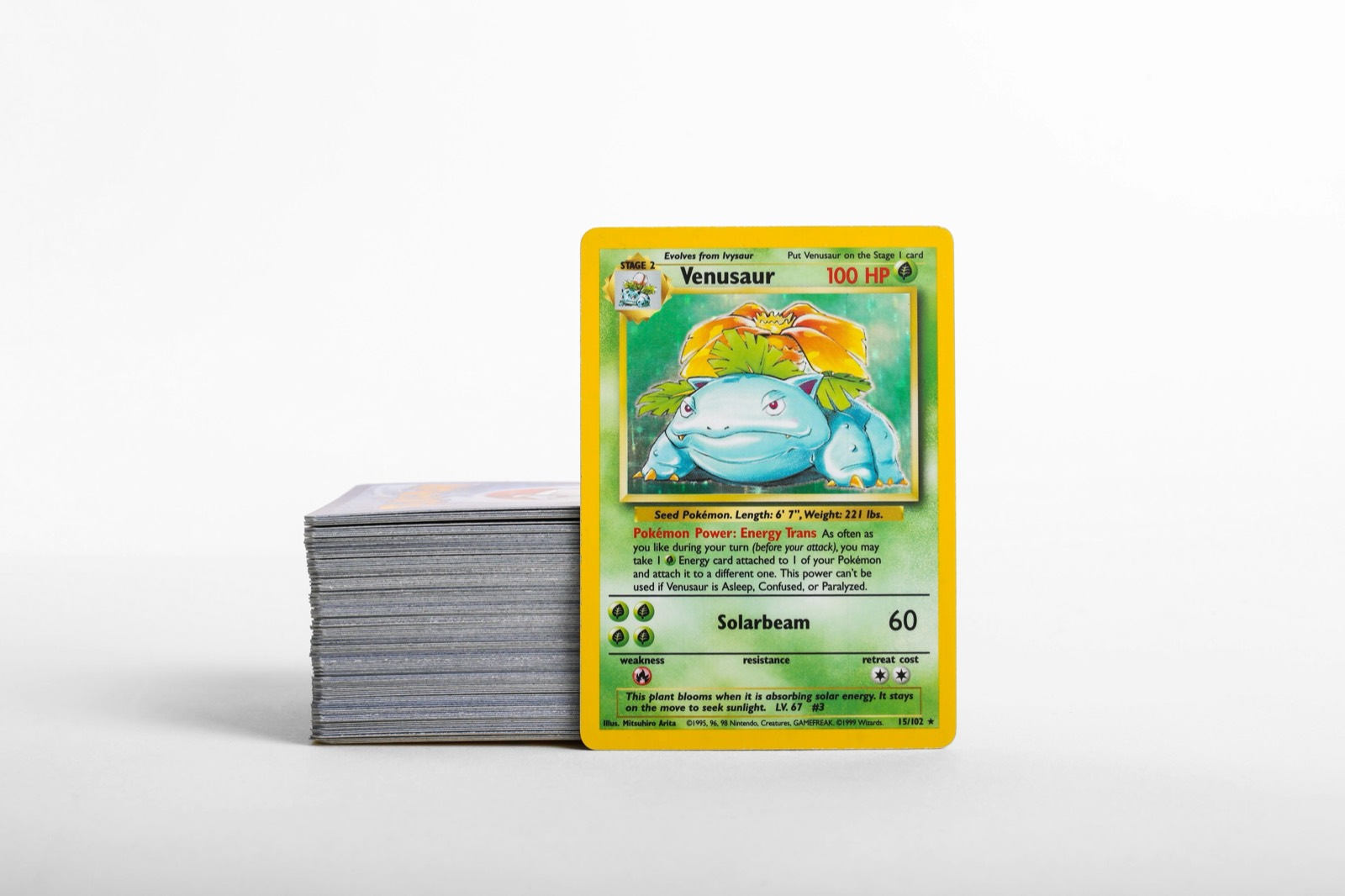
Reverse holo means the foil treatment moved
A reverse holo Pokemon card usually has foil or patterned shine across the card body while the main artwork area is not the normal holo focus. The exact treatment changes by era, but the collector problem stays the same: a reverse holo is a different variant from the regular card.
If you are building a master set, pricing a duplicate, or trading condition-sensitive cards, that difference matters.
How reverse holos differ from regular holos
Regular holo cards normally put the shine in the artwork window. Reverse holos put the shiny treatment outside that normal area or across the card background. Some sets use stamped patterns, energy symbols, Pokeball patterns, or era-specific textures.
Check:
- Set era
- Card number
- Rarity
- Reverse pattern
- Whether a normal holo version also exists
- Condition of the reverse surface
The broader holo types guide helps separate regular holo, reverse holo, promo holo, and special foil treatments.
Why reverse holos matter for master sets
Many modern sets have regular versions and reverse holo versions for a large part of the checklist. A card can be easy to find as a regular copy and annoying to finish as a clean reverse. That is why master set collectors track reverse slots separately.
If you only log one owned copy of the base card, your checklist can look complete while the reverse slot is still missing.
Reverse holo condition problems
Reverse holos can show scratches, print lines, fingerprints, clouding, and edge wear quickly because the shiny surface catches light across a larger area. A reverse card that looks clean in flat lighting may show issues when tilted.
Before grading, selling, or trading, inspect:
- Surface scratches under angled light
- Print lines across the foil
- Edge whitening
- Dents or binder pressure marks
- Fingerprints or residue
The surface damage guide and fingerprint guide are useful companions here.
When reverse holos carry a premium
Most reverse holos are affordable, but some matter because of the Pokemon, set age, low supply in clean condition, or a special pattern. Japanese 151 Master Ball reverses are the obvious modern example, but older stamped reverses and popular vintage-era reverses can also carry stronger demand.
Do not assume every reverse is valuable. Confirm exact card, pattern, condition, and recent comps with a Pokemon card price checker.
Track reverse variants separately
For inventory, a regular copy, holo copy, reverse holo copy, and special reverse pattern should not collapse into one line. Record variant, condition, language, quantity, and whether the copy fills a master set slot.
A Pokemon collection app helps because reverse variants are exactly the kind of detail that spreadsheets lose when the collection gets large.
The simple rule
A Pokemon reverse holo card is a copy-level variant, not just another duplicate. Identify the foil pattern, inspect the surface carefully, price the exact version, and track reverse slots separately if you care about complete sets.