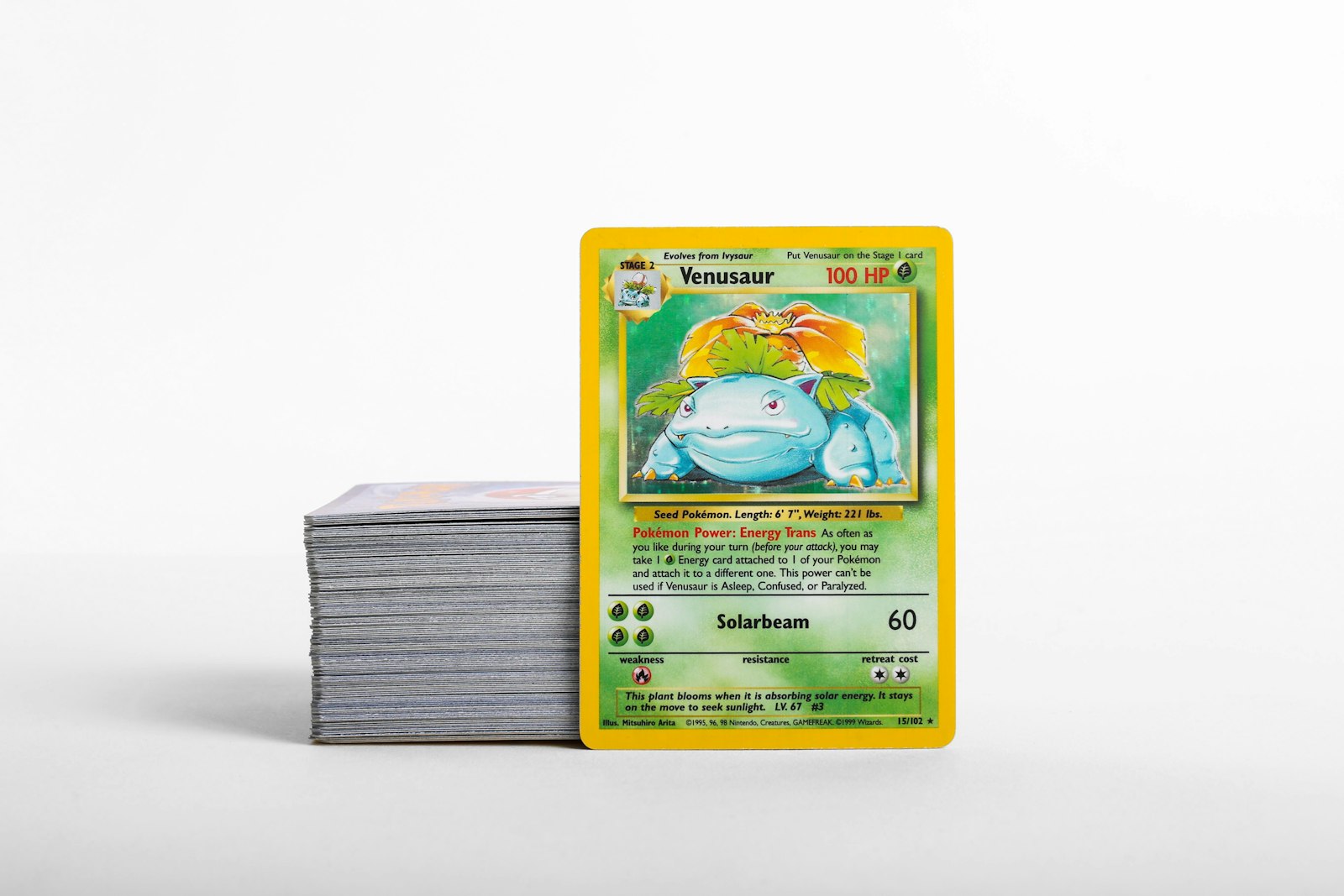
When you pull a new card or acquire a vintage single, your first instinct is to protect it. But not every card requires a magnetic case, and not every card is safe in a standard binder. Matching a Pokemon card's physical condition to the right storage environment is the key to preventing long-term decay without overspending on protective gear.
If you store a warped holofoil card incorrectly, it can bend further; if you slide a card with soft edges into a tight pocket, you risk turning a minor flaw into permanent damage. To make smart storage decisions, you must first evaluate the physical state of your cards. By identifying specific types of wear, you can tier your protection strategy perfectly and keep your collection safe for years to come.
The Core Framework: Matching Card Condition to Storage Types
Before diving into detailed inspections, it helps to have a clear roadmap. Not all raw cards are created equal, and your storage choices should reflect their current condition.
Here is a quick reference framework to help you decide how to house your cards:
- Pristine to Near Mint (NM): These cards show virtually no wear. Double-sleeve them immediately using a perfect-fit sleeve and a standard deck protector, then store them in side-loading binders with archival-safe pages. High-value hits in this category should transition directly to rigid toploaders.
- Lightly Played (LP) to Moderately Played (MP): These cards show minor edge wear or light surface scratches. Single-sleeve them in standard deck protectors. They are excellent candidates for standard binder collections where they can be enjoyed safely without risking further friction.
- Heavily Played (HP) to Damaged (DMG): These cards have major whitening, creases, or stains. Single-sleeve them in loose penny sleeves to prevent further flaking or tearing of the paper layers. Store them in bulk storage boxes with clean dividers, or use them as binder fillers if the front illustration still displays well.
Using a digital pokemon collection app can help you keep track of which cards are stored in your binders versus your bulk boxes, ensuring you never lose track of your raw cards' physical locations.
Evaluating Edge and Corner Wear for Binder Decisions
Edges and corners are the most vulnerable parts of a raw card. When a card is handled, shuffled, or repeatedly slid in and out of tight plastic pockets, the paper layers can split, resulting in "whitening." Looking closely at these areas will tell you if a card is sturdy enough for a binder page.
To inspect for edge wear, hold the card under a bright, direct light source against a dark background (such as a black playmat). Look closely at the blue borders on the back of the card. Even tiny white specks indicate edge wear.
If a card shows zero whitening and sharp, crisp corners, it is a prime candidate for a side-loading binder. Always use a clean penny sleeve or deck protector before sliding it into a binder pocket. If the card already has moderate edge wear or soft, fraying corners, tight binder pockets can snag the lifting paper fibers, worsening the damage. For these cards, stick to looser penny sleeves and flat, static storage boxes to keep the edges completely still.
Assessing Surface Scratches and Foil Curling for Sleeve Selection
A card's surface is highly susceptible to micro-abrasions, fingerprints, and environmental warping. Holofoil cards are particularly prone to "foil curl" due to changes in humidity, as the metallic foil layer and the paper backing expand and contract at different rates.
To spot surface scratches, tilt the card slowly under a strong light source. Look for faint lines, cloudy patches, or fingernail indents on both the front and back.
If a holofoil card is starting to curl, storing it raw in a loose box will allow it to warp further over time. Instead, double-sleeve the card: insert a perfect-fit sleeve from the top down, and then slide that into a standard sleeve from the bottom up. Once double-sleeved, place the card inside a tight, flat binder pocket or a rigid toploader. This gentle, even pressure helps flatten the card naturally and blocks ambient moisture from entering the paper layers.
When a Raw Card Deserves a Toploader or Magnetic Case
Toploaders and magnetic one-touch cases offer maximum protection, but they also take up significantly more physical space and budget than binders. You need a clear rule of thumb for when a card earns its way into these heavy-duty holders.
First, consider value and sentiment. If a card is a rare secret rare, an alternate art, or holds deep personal value, bypass the binder entirely and go straight to a rigid holder.
Second, look at structural integrity. Any card that has a minor indent, micro-crease, or extreme foil curl should be placed in a rigid holder. Toploaders prevent the card from flexing, which keeps minor structural flaws from expanding into full creases.
Always remember to place the card in a penny sleeve before inserting it into a toploader. Putting a raw, unsleeved card directly into hard plastic will scratch the delicate surface of the card when it slides against the rigid walls.
How to Safely Organize and Store Your Lower-Condition Raw Cards
Not every card in your collection will be a pristine gem. Moderately played, heavily played, or vintage cards with noticeable wear still hold historical value and deserve proper care. You do not need to spend a fortune on premium binders for these cards, but you should still protect them from further decay.
Use acid-free cardboard or plastic storage boxes designed specifically for trading cards. Ensure the cards are packed snugly enough to stand upright so they do not sag and warp, but loose enough that you can flip through them without bending the corners.
Even in bulk storage, any holofoil or rare card showing wear should still get a penny sleeve. This simple barrier prevents the abrasive back of one card from rubbing against the front of another when the storage box is moved or sorted. You can read more about maintaining your collection and protective gear on our blog.
Keeping Your Collection Safe and Documented with PokeSnap
Evaluating your cards and placing them in the right sleeves and binders is only half the battle. To truly protect your collection, you need a digital inventory that matches your physical organization.
With PokeSnap, you can use our advanced pokemon card scanner to instantly identify and catalog your cards right after you inspect them. Instead of manually typing out set numbers and names, simply scan the card, log its current condition, and note whether it is stored in a binder, a toploader, or a bulk box. PokeSnap keeps your entire collection organized, searchable, and safe in the palm of your hand. Download PokeSnap today to build a smarter, safer home for your cards.