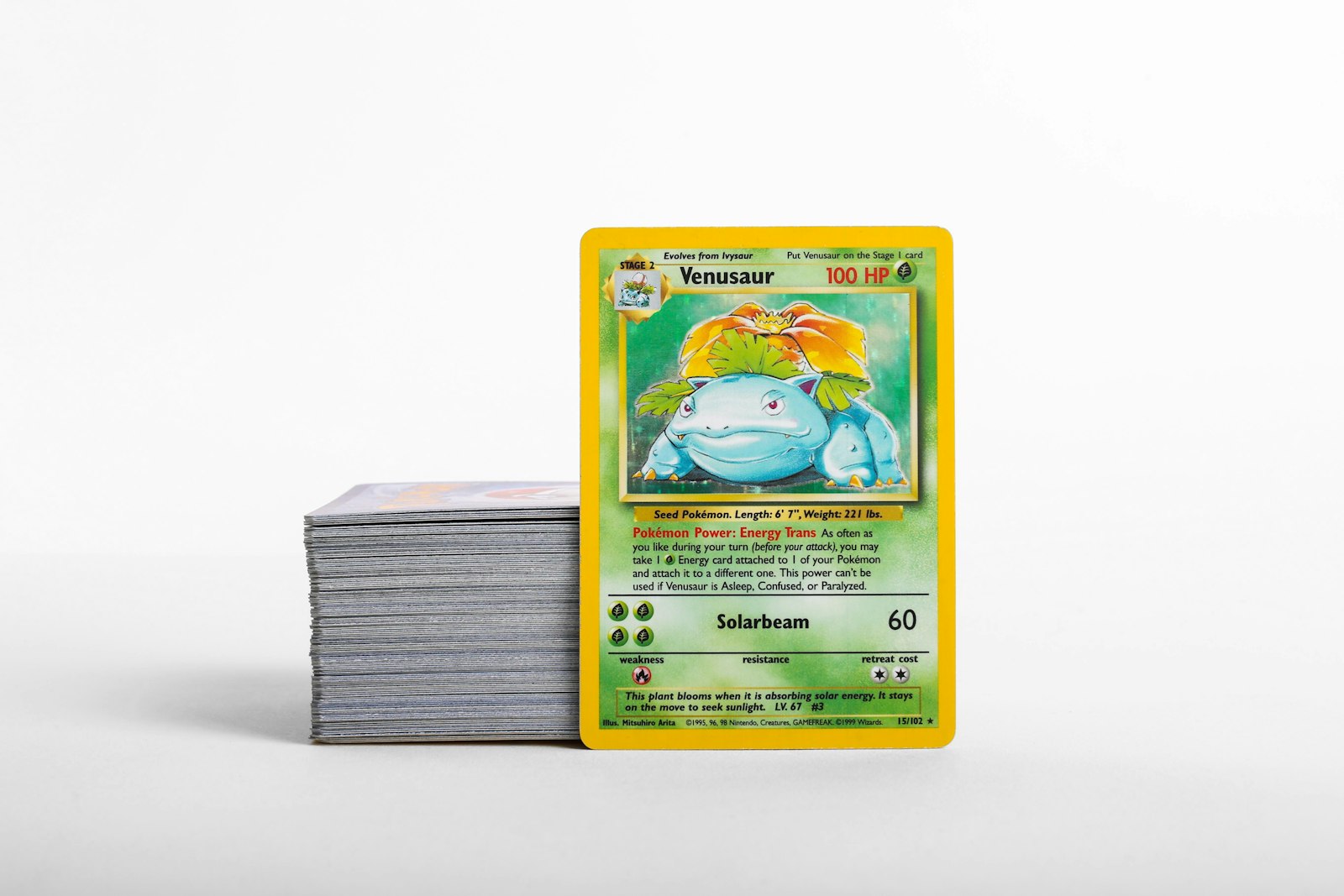
Immediate Triage Framework for Raw Pokemon Cards
Every raw Pokemon card added to your desk needs a quick physical inspection before it finds a home. Placing a high-value textured foil straight into an unsleeved binder pocket can cause micro-scratching, while leaving a lightly worn card loose in a box leads to chipped edges. To protect your collection efficiently without overspending on supplies, apply a fast condition-based triage framework:
- Clean Raw Hits (Near Mint / Minimal Wear): Sleeve immediately in a clear penny sleeve or soft sleeve, then assign to a side-loading binder page or toploader depending on total collection value.
- Lightly Played Singles: Use soft sleeves to prevent edge flaking, then store in organized binder pages or card storage boxes with dividers.
- Moderately Played or Worn Cards: Protect with standard sleeves if preserved for binder sets; otherwise, group in acid-free storage boxes separated by set and rarity.
- Textured Foils & High-End Cards: Double-sleeve or pair a penny sleeve with a rigid toploader or magnetic holder to eliminate compression risks.
Before placing any card into permanent storage, cataloging your pulls with a quick mobile scan using a Pokemon card scanner creates a digital record of identity and baseline condition, keeping your physical organization aligned with your mobile tracking app.
How to Inspect Surface and Edge Vulnerabilities
Accurate triage begins under strong light. Desk lamps with adjustable neutral LED lighting work best for spotting subtle physical defects that dictate which protective sleeve or binder slot a card requires.
Position the raw card flat under your light source at a 45-degree angle. Rotate it slowly to reveal hidden flaws across three key inspection areas:
- Surface Finish and Foil Layer: Check for micro-scratches, foil clouding, fingerprint oils, and print lines. Holographic and textured cards require clean, smooth sleeves because trapped grit inside a tight sleeve can grind against the surface foil over time.
- Edges and Corner Tips: Look along the blue back borders for edge whitening (chipping), silvering on the front borders, or snagged corner tips. Whitened edges are structurally weaker and flake easily if friction is applied during insertion into tight pockets.
- Card Structure and Centering: Check for subtle indents, binder ring pinch marks, or foil curling caused by humidity shifts. Bending or structural warping means the card needs stable, flat storage rather than loose box placement.
Identifying these physical vulnerabilities before selecting storage gear prevents minor wear from turning into permanent damage.
When to Use Soft Sleeves vs. Perfect Fits
Selecting the inner layer of protection is the most critical decision in your card preservation routine. The sleeve acts as the primary shield against surface friction, dust, and handling moisture.
Penny Sleeves (Standard Soft Sleeves)
Standard clear polyethylene penny sleeves are the universal baseline for raw cards. They offer ample interior room, ensuring the card edges do not scrape against tight side walls during insertion.
- Best for: Raw hits, trade binder singles, cards heading into toploaders, and general card storage.
- Usage Tip: Always slide the card gently into the sleeve by pinching the top edges open slightly to prevent corner snags.
Perfect Fit Sleeves (Inner Sleeves)
Perfect fit sleeves hug the exact outer dimensions of a standard card. While excellent for creating an air-tight seal when double-sleeving, they carry handling risks if used carelessly.
- Best for: High-end binder cards, double-sleeving valuable textured foils, and slabs-in-progress.
- Risk Factor: Forcing a raw card with minor corner whitening into a tight inner sleeve can catch and peel the corner layer back. If a card shows edge softness, stick to standard soft sleeves instead.
Choosing Binders, Toploaders, or Rigid Holders
Once wrapped in primary sleeve protection, raw singles require secondary storage based on how frequently you plan to view or handle them.
| Storage Format | Recommended Condition Tier | Best Application | Key Safety Requirement | | :--- | :--- | :--- | :--- | | Side-Loading Ringless Binder | Near Mint to Light Play | Set collections, complete subsets, trade binders | Archival-safe polypropylene pages, low humidity environment | | Rigid Toploader | Near Mint, High-Value Singles | Staging cards, shipping singles, high-value raw hits | Paired with a soft sleeve inserted opening-down | | One-Touch Magnetic Case | Premium Singles & Personal Grails | Display pieces, shelf showcases | Proper corner cutouts, soft inner sleeve shim | | Bulk Storage Boxes | Played Singles, Commons & Uncommons | Bulk organization, deck-building inventory | Acid-free corrugated cardboard, vertical card orientation |
Side-Loading Ringless Binders
Avoid traditional 3-ring metal binders whenever possible. The ring metal can create devastating compression indents along the inner column of cards if pages slip or catch. Side-loading binders with stitched cloth backings keep cards flat, prevent dust from entering top openings, and stop singles from sliding out during transport.
Toploaders and Hard Cases
Toploaders provide structural rigidity against bending and impact. Always pair a toploader with a penny sleeve. Insert the card into the penny sleeve opening-down, then slide the sleeved card into the toploader opening-up. This creates a dust barrier at both ends.
For magnetic cases, verify that the holder includes recessed corner pockets. Standard flat magnetic cases can compress card corners if the depth rating does not match card thickness.
Storing Worn Singles and Bulk Safely
Not every card in a collection requires high-end rigid protection. Moderately Played (MP), Heavily Played (HP), or common bulk cards can be safely stored in high-density storage boxes if you follow structured packing guidelines:
- Store Vertically: Always stand raw cards on their bottom edges inside storage rows. Laying cards flat in tall stacks creates heavy downward pressure that presses debris into surface coatings and causes bottom cards to stick together.
- Use Index Cards or Plastic Dividers: Group sets, eras, and duplicates using labeled dividers to prevent unnecessary browsing friction.
- Check Market Comps for Surprises: Before dumping non-holo bulk into unsorted storage boxes, use a Pokemon card price checker to flag playable Trainer cards, short-printed variants, or promos that deserve sleeve protection.
Proper box organization keeps lower-tier cards easily accessible while ensuring they do not suffer mechanical crush damage.
Guarding Against Foil Curl, UV Light, and Stacking Pressure
Physical sleeves and binders only guard against contact wear. Environmental factors like humidity, temperature swings, and light exposure pose silent threats to raw card condition over time.
Foil Curl and Moisture Control
Holographic foil layers expand and contract at different rates than the cardboard backing when atmospheric moisture changes. High humidity causes cards to curl inward toward the front surface, while low humidity causes backward curling.
- Solution: Keep your storage area at 40% to 50% relative humidity. Place food-grade silica gel desiccant packs inside sealed storage containers or binder boxes to absorb excess moisture.
UV Light Degradation
Direct sunlight and unshielded fluorescent bulbs fade ink pigments rapidly. Pink, yellow, and red inks on card borders fade first under UV exposure.
- Solution: Never display raw or sleeved cards on open walls facing direct window light. Use UV-blocking display frames or store valuable binders in dark, temperature-controlled closets.
Synchronizing Physical Storage Tiers with Your Digital Tracker
A physical storage system is only as effective as your ability to find specific cards without tearing through every binder and box. As your collection grows across sleeves, top-loaders, and row boxes, digital tracking keeps every physical location connected.
By organizing your physical inventory with a dedicated Pokemon collection app, you can attach precise condition tags, binder page numbers, or storage box labels directly to every scanned card entry.
When you open new booster packs or return home from trade events, scanning your pulls directly into PokeSnap ensures your digital records instantly reflect your physical storage decisions. PokeSnap makes it easy to catalog raw cards, track set completion gaps, check accurate comps, and manage your entire binder collection from your phone.