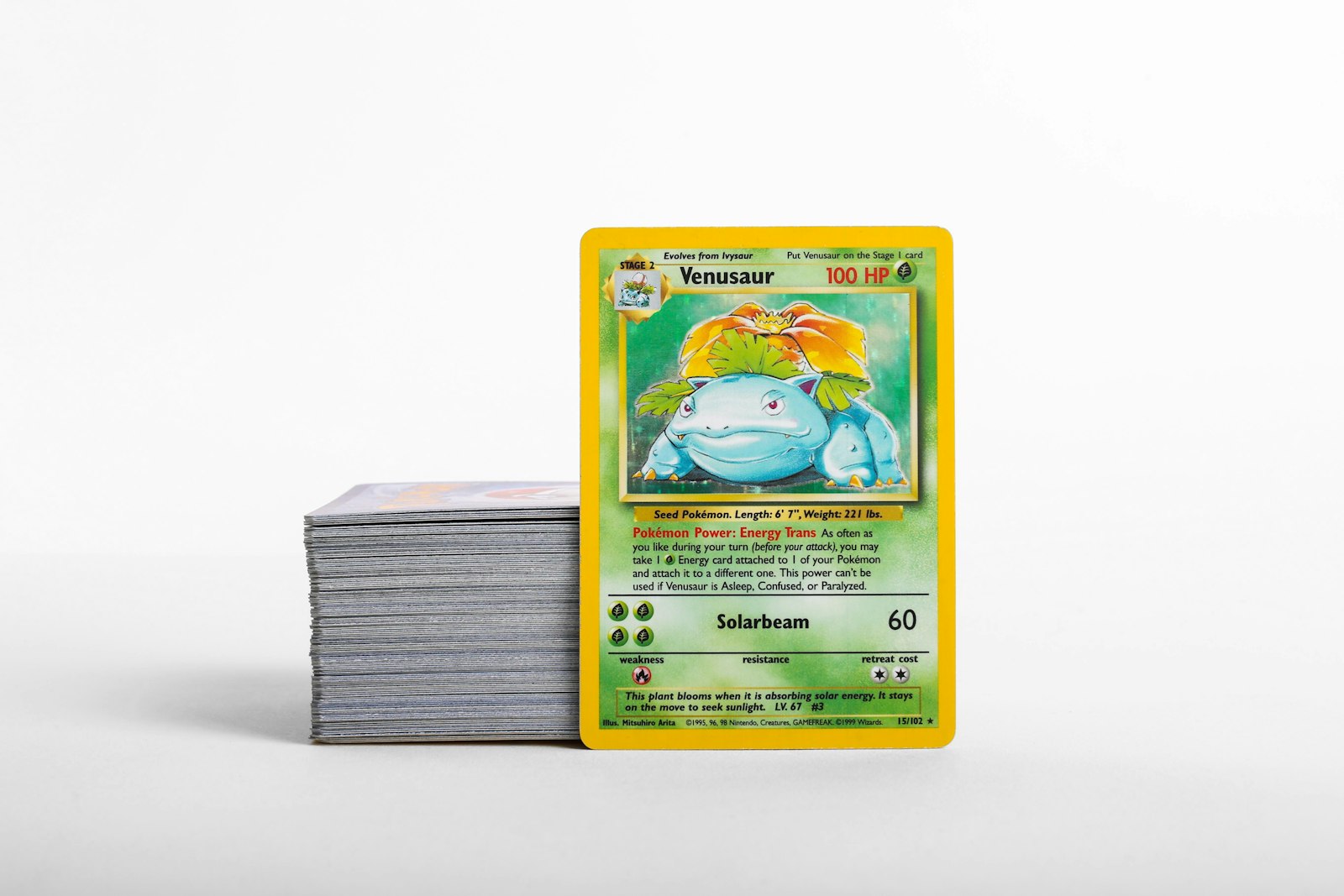
Pulling a brilliant Holofoil, Secret Rare, or full-art card from a pack is one of the best moments in Pokemon collecting. However, when you revisit that same card months later in your storage box, you might notice something frustrating: the card has developed a noticeable curve or bend.
Foil curl is one of the most common issues facing TCG collectors. Because holofoil cards are constructed from bonded layers of paper cardstock and metallic foil, environmental changes cause these materials to contract and expand at different rates. If stored improperly, a curved card can suffer from corner wear, surface scratches, or permanent creasing when placed into tight binder pages or hard cases.
Here is a practical guide on how to inspect, flatten, sleeve, and store curved holofoil Pokemon cards to protect their physical condition for the long haul.
Why Holofoil Pokemon Cards Curve
To protect curved cards, it helps to understand why the curvature happens in the first place. A modern or vintage holofoil card consists of two core materials: cellulose paper fibers on the back and a thin metallic foil layer fused to the front surface.
- High Humidity (Forward Curl): When ambient air carries high moisture, the rear paper cardstock absorbs water molecules and expands. Because the front metal foil layer cannot absorb moisture, the expanding back pushes the edges forward, creating a concave shape (cupping face up).
- Low Humidity (Backward Bending): When the environment is extremely dry, paper fibers lose moisture and shrink. The front foil layer maintains its dimensions while the back contracts, pulling the card edges backward into a convex shape.
Because this process is driven by relative moisture, gentle curvature is rarely permanent paper damage by itself. However, improper handling while the card is curved can easily create permanent defects like foil hairline scratches or spine stress marks.
Triaging Card Condition Before Storage
Before taking steps to sleeve or flatten a bent card, perform a quick triage inspection on a clean, soft surface like a plush playmat.
- Check for Stress Creases: Look closely along the center spine and corner diagonal lines under direct light. A natural environmental curve will show smooth paper curves without micro-fractures. If light reflects off a sharp ridge, the card paper fibers have already cracked.
- Examine Foil Haze: Tilt the card under LED light to confirm the foil layer is free from surface hazing or cloudiness caused by friction.
- Log the Initial State: Use a digital collection tool like a pokemon collection app to catalog the card in your inventory, note its current condition tier, and assign it to an intake hold queue before sorting it into permanent storage.
Selecting Sleeves for Curved Cards
Standard sleeving rules require extra care when handling curved singles. Applying the wrong sleeve format to a bent card can pinch corners or scratch delicate top coats.
- Avoid Tight Perfect-Fit Sleeves on Severe Curves: Forcing a curved card into a tight inner sleeve forces the sharp corners against the sleeve seams, leading to soft corners or edge whitening.
- Use Soft Archival Penny Sleeves First: Standard clear penny sleeves offer loose clearance. Slide the curved card gently into a penny sleeve from top to bottom, making sure not to scrape the high point of the foil arch against the plastic edge.
- Double-Sleeving Rules: If you choose to double-sleeve, only do so after the card has been flattened back to a neutral profile. Double-sleeving a bent card traps air pockets that apply uneven pressure when compressed inside binders.
Safe Flattening Protocols Before Permanent Storage
Never attempt to bend a curved Pokemon card back into shape with your fingers or reverse-snap it. Manual bending places direct shear stress on the paper core and almost always results in a permanent surface crease.
Instead, use a controlled mechanical compression protocol:
Method 1: Heavy Book Sandwich (Dry or Balanced Ambient Air)
- Place the card inside a clean, unused soft penny sleeve.
- Lay the sleeved card completely flat between two smooth sheets of acid-free paper or clean cardboard inserts.
- Place the sandwich inside a thick, heavy book (like a hardbound encyclopedia or binder).
- Stack 5–10 pounds of flat weight evenly over the book surface.
- Leave the setup undisturbed for 48 to 72 hours in a room with stable humidity (around 45%–50% RH).
Method 2: Controlled Desiccant Box (For Moisture-Swollen Cards)
If your cards are cupped due to high humidity, place the sleeved card inside a sealed plastic container alongside a sealed 50-gram silica gel packet for 24 hours. The desiccant absorbs excess atmospheric moisture from the container, allowing the paper layer to shrink back to its original proportions before you apply light flat weight.
Choosing the Right Storage Format: Binders vs. Toploaders
Once your card has returned to a level profile, select storage gear based on the card's wear profile and overall role in your collection.
Ringless Side-Loading Binders
Side-loading binders built with archival-safe polypropylene pages and a rigid exterior shell provide excellent long-term protection. The uniform page tension across a multi-pocket page keeps cards under subtle, safe pressure that prevents foil curl from returning.
Storage Tip: Avoid 3-ring metal binders. If a binder ring overlaps a page holding a slightly curved card, page slump can press the metal ring directly into the card edge, causing irreversible ring denting.
Toploaders and Semi-Rigid Holders
For valuable singles or cards pending grading evaluation, insert the penny-sleeved card into a clean 3" x 4" rigid toploader.
- Ensure the toploader is clean and free of interior plastic burrs.
- If the card still retains a tiny residual bow, the rigid walls of the toploader will safely hold it flat without applying pinch force to the edges.
- Keep stored toploaders oriented vertically inside high-density card storage boxes rather than stacking them horizontally in heavy piles.
Before locking cards into storage boxes or binder pages, run a quick pass with a pokemon card scanner to confirm set numbers, variants, and card IDs so you never have to pull raw cards back out of their protection just to double-check checklist gaps.
Environmental Rules for Stored Cards
Your storage setup is only as effective as the environment around it. To stop foil curling from returning to your collection box or binders:
- Target 45% to 55% Relative Humidity: Use an inexpensive digital hygrometer near your collection shelves. If humidity spikes above 65%, run a room dehumidifier.
- Avoid Direct Sunlight & Heat Sources: UV light breaks down foil laminates and accelerates paper yellowing. Store binder shelves away from windows, hot air vents, or warm outer walls.
- Store Binders Vertically: Stand your card binders upright like books. Stacking binders flat on top of each other puts excessive pressure on bottom pages, forcing dust into sleeve openings and pressing bent edges flat too aggressively.
When evaluating existing inventory values before reorganizing storage boxes, check recent comps using a reliable pokemon card price checker to decide which cards warrant premium hard storage and which fit comfortably in standard binder pages.
Organize and Protect Your Collection with PokeSnap
Managing card protection is much simpler when your physical storage matches a clean digital inventory. With PokeSnap, you can instantly scan raw singles, log card condition notes, track binder slot positions, and spot missing set gaps right from your phone. Download PokeSnap today to keep your Pokemon collection structured, safe, and completely up to date.