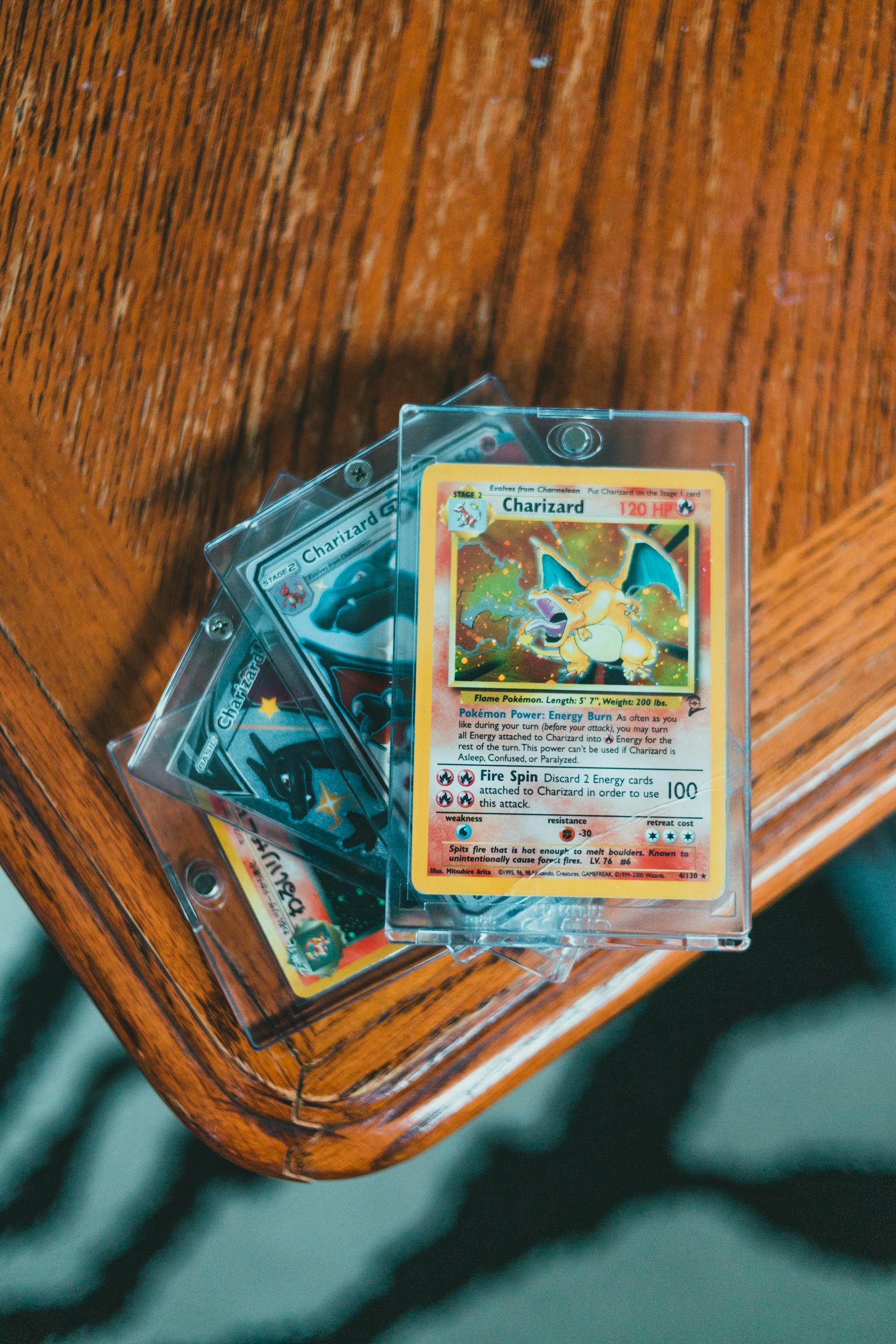
Surface damage is easy to miss
Pokemon card condition is not only corners and whitening. Surface damage can change value even when the card looks clean at a glance. Scratches, dents, print lines, binder pressure, holo wear, and small surface impressions all affect how collectors judge a copy.
This is especially important before grading, selling, trading, or logging a card as near mint.
Use angled light before you decide condition
Flat overhead light hides a lot of surface issues. Tilt the card slowly under a lamp or window and watch how the surface reflects. Holo cards, textured cards, and older foils usually reveal flaws only when the angle changes.
Look for:
- straight print lines
- small dents or pressure marks
- surface scratches
- clouding on glossy areas
- foil scuffs
- binder ring or page pressure marks
- dirt or residue that should not be rubbed aggressively
If you are already photographing inventory, pair this with how to photograph Pokemon card condition so the flaw is visible later.
Separate manufacturing marks from handling damage
Some marks come from production. Others come from handling, binders, sleeves, or storage. Buyers and graders may still care about both, but the story matters when you describe the card.
Print lines and factory specks are common on some releases. Dents, scratches, sleeve scuffs, and pressure marks usually point to handling or storage. Either way, the card should not be priced like a flawless copy if the mark is visible.
Check the back too
Collectors often inspect the holo front and forget the back surface. The back can show scratches, dents, grime, whitening, or pressure marks that make a card weaker than the front suggests.
Turn the card under the same angled light and inspect:
- blue border and edges
- Pokeball center area
- corners
- any cloudy or rubbed patches
- dents that only appear in reflection
This step matters before using a Pokemon card price checker because condition decides which price lane is realistic.
Do not clean aggressively
If the mark is dust or light debris, gentle handling may help. If it is a scratch, dent, print line, or surface impression, aggressive cleaning will not fix it and can make the card worse.
For preservation decisions, compare with how to clean Pokemon cards safely and how to protect Pokemon cards.
Surface damage changes grading decisions
A card can have strong corners and centering but still be a poor grading candidate because of the surface. That is why surface inspection should happen before a card enters your grading pile.
If you are triaging a batch, inspect surface first, then centering, then edges and corners. The how to prepare Pokemon cards for grading guide is the next step after a card passes this first screen.
Record flaws in your inventory
Surface notes are easy to forget. If a card has a visible dent, print line, or scratch, log it while the card is in front of you. That note helps when you trade, sell, or compare duplicates later.
A Pokemon card collection app is useful here because the strongest duplicate is not always the most expensive-looking copy. Sometimes it is simply the one with fewer hidden flaws.
The simple rule
To spot Pokemon card surface damage, inspect the front and back under angled light, separate print marks from handling wear, avoid aggressive cleaning, and record visible flaws before pricing or grading. Surface condition is a value signal, not a footnote.
If you need the full condition framework, continue with the Pokemon card condition guide.