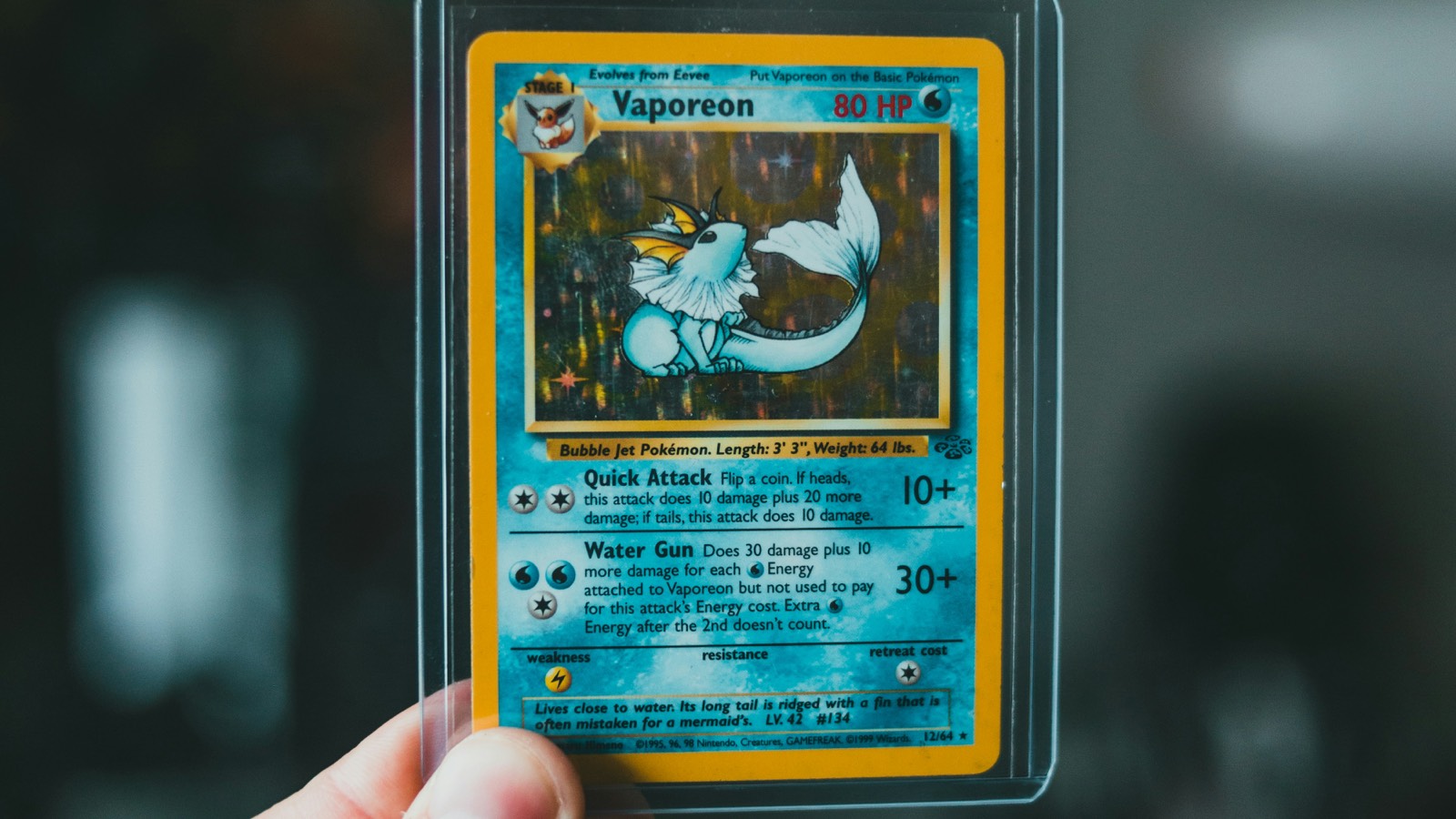
Why the grading company you pick actually matters
A grade is not just a number. It is a third-party opinion attached to a slab from a specific company, and the market does not price all three of those slabs equally. A PSA 9 and a CGC 9 of the same card are usually not identical numbers on a recent sales chart. That means the question is rarely "what grade will this get" — it is "which grading company will the buyer trust most for this card, at this tier."
That makes the choice between PSA, CGC, and BGS a real product-level decision for collectors. The three biggest grading companies have different scales, different price tiers, different turnaround windows, and different resale profiles in the Pokemon TCG market specifically.
The three companies at a glance
Before getting into trade-offs, it helps to anchor what each company is.
- PSA (Professional Sports Authenticator) — the dominant grading company for Pokemon TCG by resale volume. Uses a 1-10 integer scale with no half-step grades and a top tier of "PSA 10 Gem Mint." The most widely searched and quoted slab on the secondary market.
- CGC (Certified Guaranty Company) — known for card games and comics. Uses a 1-10 scale with half-step grades and an additional "Pristine 10" above the standard 10. Generally more affordable on lower tiers and faster than PSA at many price points.
- BGS (Beckett Grading Services) — best known for sports cards. Uses a 1-10 scale with half-step grades and sub-grades for centering, corners, edges, and surface. The "BGS 9.5 Gem Mint" sits below a much rarer "BGS 10 Pristine" — getting a true Beckett 10 is harder than a PSA 10.
The Pokemon card grading guide, Pokemon card grading cost guide, and Pokemon card grading turnaround guide cover the grading process in depth — this guide focuses on the company choice specifically.
Resale value: where PSA usually leads on Pokemon
For most modern Pokemon TCG cards, PSA is the resale leader. A PSA 10 of a popular card almost always trades at a premium over the same card graded by CGC or BGS at the equivalent tier. That gap is real, and it is the single biggest reason PSA is the default choice for serious Pokemon collectors selling to a broader market.
Reasons the PSA premium persists:
- The widest buyer base for Pokemon-specific search and sales
- The most sold-comp data, which makes pricing easier for buyers
- A long-established reputation for Pokemon specifically
- Slab design recognition for casual buyers
- Strong representation in vintage Pokemon as well as modern
That said, the gap is not absolute. CGC and BGS slabs sell, and on certain cards the premium is narrow enough that turnaround and cost outweigh the resale gap.
Cost and turnaround: where CGC and BGS often win
If you are grading bulk modern Pokemon cards where the upside per card is modest, the calculation shifts. Service fees, turnaround windows, and minimum declared values all start to matter more than a small resale premium.
What to compare:
- Base service tier fee per card at each company
- Bulk submission discounts when available
- Turnaround window at each tier (weeks vs months)
- Declared value caps for each service tier
- Return shipping and insurance fees per submission
CGC and BGS often offer cheaper tiers and faster turnarounds at the lower price brackets, which makes them more attractive for modern bulk grading where the goal is to slab a stack of low-to-mid value cards.
Slab style and presentation differences
Beyond the grade itself, each company's slab looks and feels different in hand. That matters for display, for binder storage, and for the buyer impression on a listing photo.
A quick side-by-side:
- PSA: clean rectangular slab, red label, simple presentation
- CGC: glossy slab with color-coded labels indicating finish type and pedigree
- BGS: thicker slab with sub-grades printed alongside the main grade
Some collectors prefer the way one company's slab looks in a display row. That is a real reason to choose, but it should be a tiebreaker — not the lead reason.
Sub-grades on BGS: useful or noise
Beckett's sub-grades for centering, corners, edges, and surface are unique among the big three. Some buyers love them — they tell a more complete story about why a card got the grade it did. Others ignore them entirely and price off the main grade only.
When sub-grades genuinely help:
- A "9.5 with all 10 sub-grades" usually trades above a normal 9.5
- A perfect set of sub-grades on a vintage card adds a meaningful premium
- They give an honest summary of which side of the card has the defect
When sub-grades do not really help:
- On modern bulk grades where the buyer pool ignores them
- When the math from the main grade alone is what the market quotes
- When a single weaker sub-grade overshadows a strong main grade
The Pokemon card grading guide covers how grades translate into the broader pricing picture; for company-specific sub-grades, treat them as a Beckett-only signal.
Cross-grading: moving a slab between companies
If you already own a slabbed card and the resale gap looks meaningful, it is sometimes worth cross-grading — submitting the slab to a different company for a fresh grade. This is more common when a strong CGC or BGS card has a chance at a PSA 10 because of the resale gap.
Things to check before cross-grading:
- The fee and turnaround at the new company
- The realistic grade band given the original company's grade
- The likely resale gap if the new grade lands as expected
- The risk that the new grade comes in lower than the original
- Shipping and insurance both ways
Cross-grading can pay off, but it is a calculated bet rather than a default move.
When PSA is the obvious choice
For a large category of Pokemon TCG submissions, PSA is the default and you should not overthink it.
Default to PSA when:
- The card is a high-value modern chase
- The card is a popular vintage holo
- You expect to sell on the broader Pokemon market
- You want maximum buyer recognition with no extra explanation
- The expected resale gap easily clears the higher PSA fees
The how to choose which Pokemon cards to grade first covers the pre-submission triage that should come before this decision.
When CGC or BGS is the better fit
For another category of submissions, defaulting to PSA leaves money on the table. CGC and BGS each have lanes where they are the better answer.
Consider CGC when:
- You are grading a stack of modern bulk cards
- You want a faster turnaround at a reasonable cost
- You are grading certain pedigreed cards that benefit from CGC's labels
- The buyer pool for your specific niche is comfortable with CGC
Consider BGS when:
- The card is a clean centering candidate that benefits from sub-grades
- You want the thicker slab presentation for a display piece
- The card sits in a price tier where the sub-grades add a recognized premium
- You are grading sports cards alongside Pokemon and want one provider
Preparing a card for any grading company
The pre-submission work is the same regardless of which company you choose. Doing it well is what protects the grade outcome.
A simple pre-submission routine:
- Inspect under direct light for surface, edges, corners, centering
- Sleeve and toploader, then store flat until shipped
- Take clear before-photos in case of shipping damage
- Confirm declared value matches the appropriate service tier
- Use protective shipping that matches the card's value
The how to prepare Pokemon cards for grading, Pokemon card pack-fresh handling guide, and Pokemon card condition guide cover the inspection and handling routine that supports a confident submission.
Track graded cards as their own line in your collection
Once a card is slabbed, it stops being interchangeable with raw copies. Both the resale market and your insurance picture want a clean record of which slab is in the slab.
A minimal log per graded card:
- Card name, set, collector number, variant
- Grading company, grade, sub-grades if any
- Cert number from the slab
- Storage location
- Purchase or grade date and source
- Current market reference value
The Pokemon collection app, how to track graded Pokemon cards, how to compare raw and graded Pokemon card prices, and Pokemon card portfolio tracker guide cover the tracking setup that keeps graded copies visible.
A simple decision checklist
Before submitting a Pokemon card:
- Is the resale market for this card clearly PSA-led, or is it more neutral?
- Does the expected grade band justify the fee at the company you are picking?
- Is the turnaround window acceptable for your sell or hold plan?
- Are the comps you are pricing against from the same company's slabs?
- Is the card prepared well enough to deserve any third-party grade in the first place?
The simple rule
PSA, CGC, and BGS all grade Pokemon cards — but they are not interchangeable in the secondary market. PSA usually wins on resale, CGC and BGS often win on cost and turnaround at lower tiers, and BGS sub-grades add real value on certain centering-strong cards. The right grading company is the one that produces the best net outcome for that specific card, after fees, turnaround, and the realistic resale gap. Pick the company that fits the card, not the card that fits a default company.