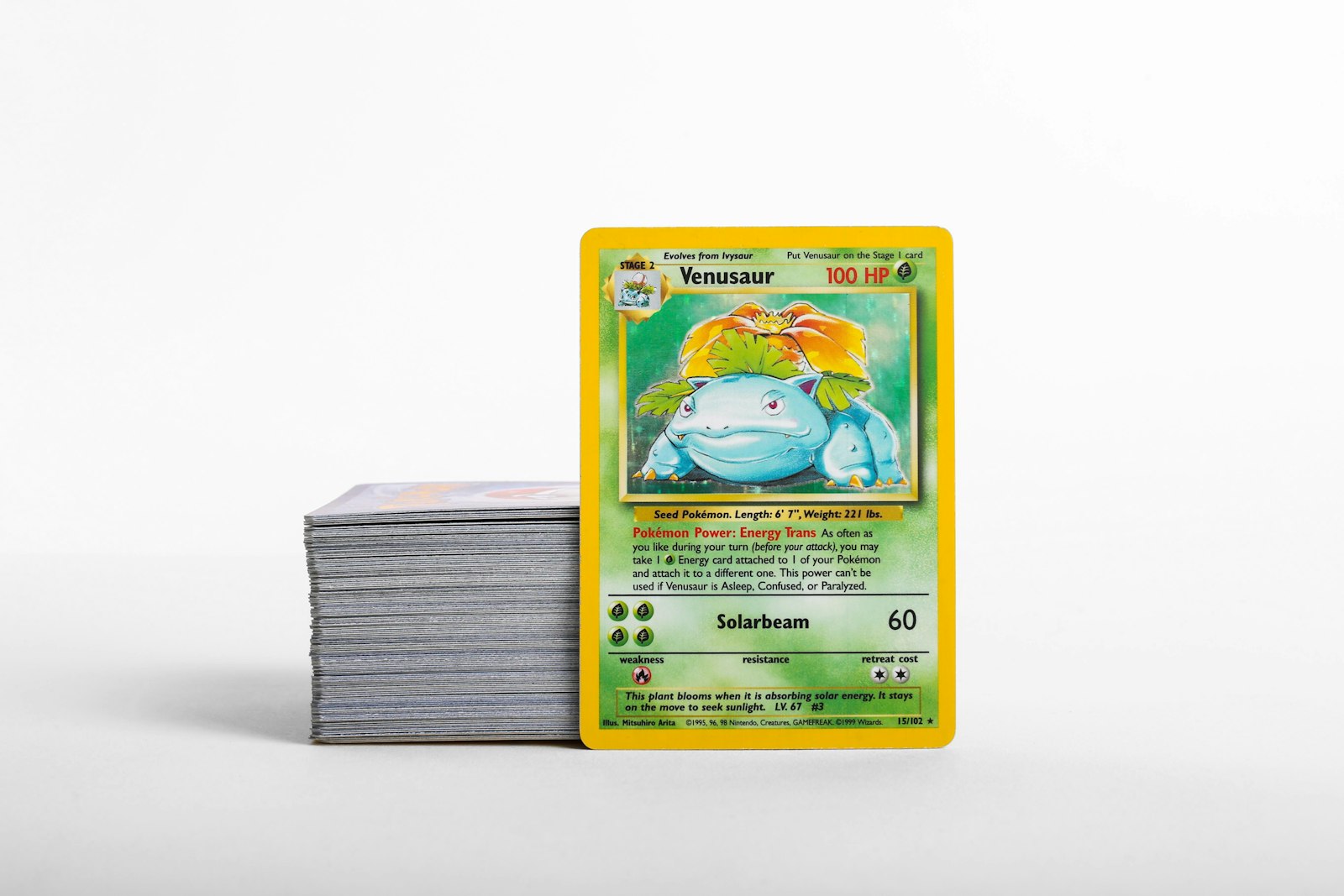
As a Pokemon card collector, finding the balance between protecting your cards and managing your budget is a constant challenge. Over-protecting low-value bulk in expensive rigid cases drains your resources and takes up massive amounts of physical space. Conversely, under-protecting your prized pulls in cheap, loose binder pages can lead to irreversible wear and condition decay.
To build a sustainable collection, you need a systematic approach. By creating a personalized Pokemon card protection matrix, you can align the physical condition and value of your cards with the exact level of storage gear they require. This ensures your high-value cards remain pristine while your bulk and play-sets stay organized without unnecessary expenses.
1. The Core Protection Matrix: Condition and Value Tiers
A successful protection strategy starts by dividing your collection into clear tiers based on physical condition and market value. Instead of treating every card the same, you can route them into one of four distinct categories.
Here is a quick overview of how to match your cards to the correct storage gear:
| Card Tier | Condition / Value Level | Recommended Protection | Primary Storage Format | | :--- | :--- | :--- | :--- | | Tier 1: Grail & High-Value | Near Mint (NM) / High Market Value | Perfect-fit sleeve + premium deck protector + toploader or magnetic case | Dedicated toploader box or slab case | | Tier 2: Binder Hits | Near Mint to Lightly Played (LP) / Mid-range Value | Standard penny sleeve or deck protector | Side-loading pocket binder | | Tier 3: Play-Sets & Holos | Lightly Played (LP) to Moderately Played (MP) / Low-to-Mid Value | Standard deck protector sleeve | Deck boxes or rowed cardboard storage boxes | | Tier 4: Bulk & Commons | Any Condition / Minimal Value | Un-sleeved or grouped in penny sleeves (for holos) | Acid-free bulk storage boxes with dividers |
By establishing these boundaries, you can immediately decide the fate of any card that enters your inventory. If you are unsure of where your cards sit in terms of value or set lists, utilizing a pokemon card price checker is an excellent first step to help you tier your collection accurately.
2. Assessing Wear: What Flaws Dictate Your Storage Choices?
Before you put a card into a sleeve, you must inspect its physical condition. Minor flaws can worsen over time if the card is stored in the wrong environment or under too much physical pressure. Keep an eye out for these specific types of wear:
- Foil Curl: Holographic cards are highly susceptible to humidity, which causes them to warp or curl. If you notice a card beginning to bend, it requires a tighter, more rigid environment. Double-sleeving and placing the card in a snug side-loading binder or a toploader can flatten the card and prevent further curling.
- Surface Scratches: Raw card surfaces are incredibly delicate. Even sliding a card in and out of a rough plastic pocket can leave fine hairline scratches. Always use a soft penny sleeve or perfect-fit sleeve before putting a card into a rigid plastic holder.
- Edge and Corner Whitening: Heavy friction against the edges of a card ruins its condition. If a card already has minor whitening on the back corners, storing it loose in a box will cause those spots to expand. These cards need to be secured in form-fitting sleeves to lock the edges in place.
3. Choosing the Right Sleeves: The Foundation of Protection
Sleeves are your first line of defense against dust, oils, and friction. However, not all sleeves serve the same purpose.
#### Penny Sleeves Penny sleeves are thin, clear, and slightly oversized. They are highly cost-effective and perfect for protecting low-to-mid-range holographic cards and reverse holos. They should always be used as the inner barrier before sliding a card into a rigid toploader.
#### Perfect-Fit Sleeves Designed to fit the exact dimensions of a standard Pokemon card, perfect-fit sleeves are ideal for double-sleeving. When inserted from the top of the card, and then placed inside a standard deck protector sleeve from the bottom, they create an airtight seal that shields the card from moisture and dust.
#### Matte and Deck Protector Sleeves These sleeves feature a textured back and a clearer front, offering excellent rigidity. They are perfect for cards you plan to play with or keep in a side-loading binder. The matte finish reduces glare and prevents cards from sticking together inside binder pockets.
4. Binders vs. Toploaders: Where to Route Your Mid-to-High Tier Cards
Once your cards are sleeved, you must decide between the accessibility of a binder and the maximum security of a rigid holder.
                  [ Raw Pokemon Card ]
                           │
               ┌───────────┴───────────┐
               ▼                       ▼
       [ High Value / NM ]     [ Mid-Range / LP ]
               │                       │
       ┌───────┴───────┐               ▼
       ▼               ▼       [ Side-Loading Binder ]
  [Sleeve +]      [Sleeve +]
 [Toploader]    [Magnetic Case]
#### Side-Loading Binders Side-loading binders with built-in, padded pages are the gold standard for set completion and viewing. Unlike top-loading binders, side-loading pockets prevent cards from slipping out when the binder is carried or turned upside down. Always avoid traditional three-ring binders with loose pages; the metal rings can easily pinch and crease the cards closest to the spine.
#### Toploaders and Hard Cases Toploaders are rigid plastic sleeves that prevent bending and corner impacts. They are the best choice for your most valuable singles. For premium display cards, magnetic one-touch cases offer a sleek look and high structural integrity, though you should ensure the card is sleeved inside to avoid surface friction against the hard plastic.
5. Managing Bulk: Low-Cost Storage for the Rest of Your Collection
Not every card deserves a sleeve and a dedicated slot in a binder. Your common, uncommon, and non-holo rare cards make up the bulk of your collection. Storing bulk efficiently keeps your living space clean and preserves the cards for future trades or deck building.
- Use Multi-Row Cardboard Boxes: Acid-free, heavy-duty cardboard boxes designed specifically for trading cards are highly affordable and space-efficient.
- Group by Set or Rarity: Use plastic or cardboard dividers to separate your bulk by expansion set, card type, or rarity. This makes finding specific cards simple when you want to build a new deck or check your inventory.
- Control the Tightness: Do not pack cards too tightly into a box, as this can crush the edges and cause corner damage. Conversely, leaving too much empty space allows cards to slide around and bump into the box walls. Use foam blocks or paper inserts to fill any gaps.
6. Keeping Your Physical Storage and Digital Records in Sync
Building a physical protection matrix is only half the battle. As your collection grows across binders, toploader boxes, and bulk bins, keeping track of where everything lives becomes increasingly difficult. If you have to flip through ten different binders just to find a single card, your organization system is failing.
This is where integrating your physical storage with a digital pokemon collection app makes a massive difference. By digitizing your collection, you can create a seamless physical-to-digital workflow:
- Scan and Identify: Use a high-quality pokemon card scanner to instantly identify your cards, capture their exact set information, and check their current market trends.
- Log Condition and Location: When you scan a card, record its estimated condition and physical storage location (e.g., "Binder A, Page 4" or "Toploader Box 1") directly in your digital inventory.
- Routine Audits: Periodically check your physical binders against your digital records. This keeps your collection accurate and ensures you never accidentally purchase duplicates of cards you already own.
For more advanced tips on managing your cards and keeping your collection organized, check out our comprehensive guides on the PokeSnap blog.
Streamline Your Collection with PokeSnap
Organizing, protecting, and tracking your Pokemon card collection does not have to feel like a chore. With PokeSnap, you can instantly scan your cards, check their values, and build a detailed digital inventory in seconds.
Whether you are sorting through piles of raw bulk or cataloging your highly protected grail cards, PokeSnap helps you keep your physical storage perfectly aligned with your digital records. Download PokeSnap today on iOS or Android and take complete control of your Pokemon card collection!