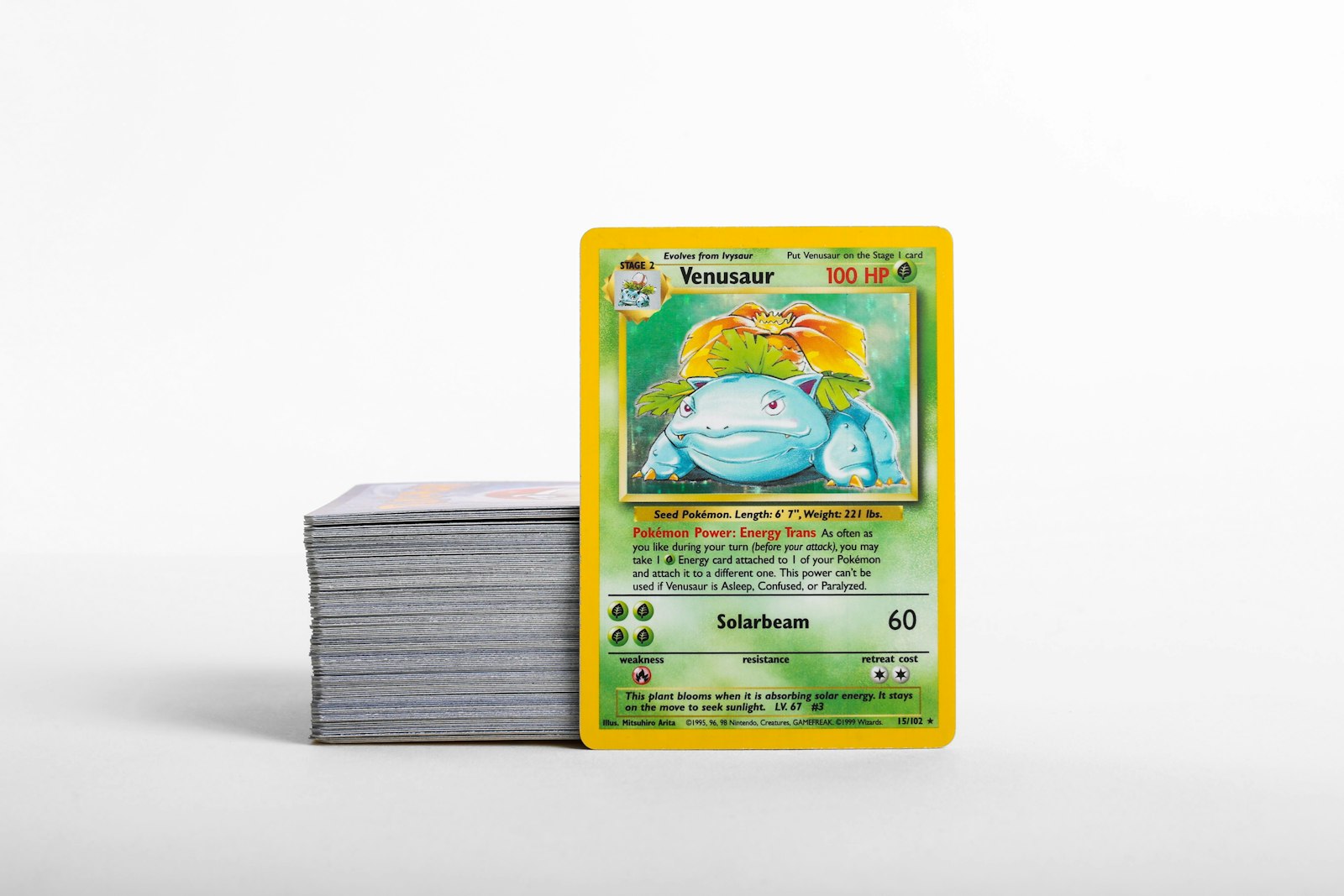
Magnetic cases sit between a top loader and a graded slab
A Pokemon card magnetic case — often called a one-touch holder — is a two-piece rigid plastic shell that snaps shut with a small magnet on one edge. Once closed, the card sits suspended between two clear panels with no tape, no seal, and no friction on the surface.
For most collectors, magnetic cases are the step above a top loader and the step below a graded slab. They are not the right answer for every card. Knowing when to upgrade — and when to stay in a top loader — is what keeps the storage budget under control.
What a magnetic case actually protects against
A good one-touch holder protects a card from four common risks:
- Surface scratches from sliding in and out of sleeves
- Edge dings from being stacked under other items
- Bending from soft sleeves alone
- Casual handling at trade nights or card shows
What it does not do:
- Protect against humidity swings on its own
- Replace a sleeve as the first inner layer for most cards
- Guarantee no movement during heavy shipping impact without extra padding
The Pokemon card sleeve types guide covers the inner layer that pairs with a magnetic case, and the how to ship Pokemon cards safely guide covers when a one-touch alone is not enough for shipping.
Pick the right thickness rating
Magnetic cases are sold by point rating, which describes the maximum card thickness the case is designed for. The point rating is in thousandths of an inch, measured per card layer.
Common sizes:
- 35pt — standard raw card, no sleeve
- 55pt — sleeved raw card
- 75pt — thicker promos, lightly double-sleeved cards
- 100pt to 130pt — jersey cards, patch cards, double-thick or signed pieces
- 180pt+ — book-style or oversized pieces, rare for Pokemon
For most Pokemon TCG cards, 35pt is too tight once you add a sleeve. 55pt and 75pt cover the realistic range for a sleeved single. Putting a sleeved card in a 35pt case is how people end up with bent corners — the case forces pressure on the card to close.
When to upgrade from a top loader to a magnetic case
A top loader is enough for most singles. Upgrade to a magnetic case when one of these is true:
- The card is worth enough that the extra cost is small relative to its value
- You plan to display the card on a shelf or wall mount
- The card moves often between trade nights, shows, or photo sessions
- You are pre-sorting cards for grading and want long-term protection while the submission is queued
- You are sending the card by mail to a grading service and want the rigid layer before it leaves your hands
The how to choose which Pokemon cards to grade first guide pairs well here — many collectors move their grading queue into magnetic cases before shipping.
When a magnetic case is overkill
Not every card needs a one-touch. The cost adds up quickly, and over-protection can become a storage problem on its own.
Stay in a top loader when:
- The card is bulk or low-value
- You only need short-term protection during sorting
- The card is going into a binder, not on display
- You are sending the card to bulk grading where the case will be removed anyway
The Pokemon card storage box guide covers how to store top-loadered cards efficiently without escalating every single piece into a one-touch.
Magnetic case vs graded slab
The visual look is similar, but the protection level is very different.
A graded slab from PSA, BGS, or CGC is a tamper-evident, sonically welded shell with a certified grade printed on a label inside. Once the slab is closed, opening it destroys the certification.
A magnetic case is reopenable. It does not certify the grade, and the card inside can be swapped at any time. That is also why a one-touch is appropriate for raw cards being inspected, traded, or photographed — and not appropriate as a substitute for a real slab.
The Pokemon card grading company comparison covers when a real slab is the right outcome.
Practical setup habits
A few habits make magnetic cases work better long-term:
- Always insert the card with a perfect-fit or penny sleeve as the inner layer if the case is sized for it
- Open and close the case over a clean, flat surface — not in mid-air
- Wipe the inside of the panels with a microfiber cloth before sealing
- Keep cases out of direct sunlight; the plastic and the card both degrade under UV
- Stack cases on edge in dedicated holders, not flat in tall piles
The Pokemon card humidity guide covers the environment around any rigid holder, and the Pokemon card surface damage guide covers the kinds of damage one-touches are designed to prevent.
Track which cards live in cases
Once a card moves into a magnetic case, it is usually a card you care about. That makes it worth tracking the move in your inventory, not just on a shelf.
A simple inventory note per case:
- Card identity (set, number, language, variant)
- Case point rating (35pt, 55pt, 75pt, etc.)
- Reason for the case (display, grading queue, shipping prep, high value)
- Location at home
The Pokemon card collection tracker guide and Pokemon card portfolio tracker guide both work with PokeSnap, so the cards in your one-touches stay linked to their current pricing and history instead of becoming a separate spreadsheet.
The simple rule
A Pokemon card magnetic case earns its place when the card inside is worth the upgrade from a top loader, when it will be displayed or moved often, or when it is being staged for grading or shipping. Pick the point rating that matches the sleeved thickness, never force the case shut, and keep the rest of the collection in top loaders so the one-touch budget goes where it actually matters.