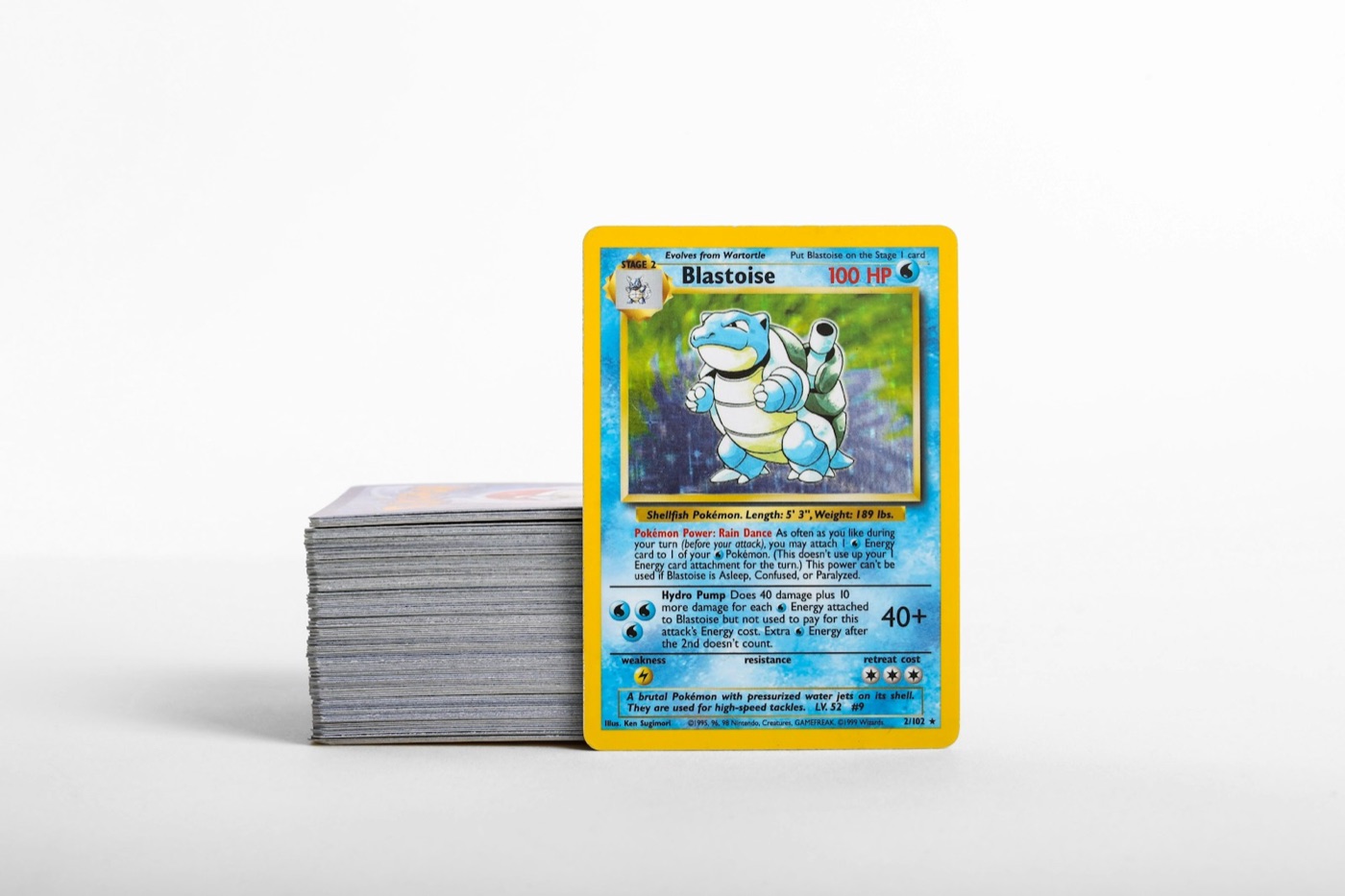
Investing is not the same as collecting
Plenty of collectors enjoy Pokemon cards as a hobby and never think about them as an asset. That is a fine path. But once a buying decision is driven by expected resale instead of personal interest, it stops being a collection and starts being an investment — and it should be evaluated like one.
This guide is not a get-rich plan. It is a framework for thinking about Pokemon cards as a long-horizon, illiquid, condition-sensitive asset, so the decisions you make today still look reasonable two or three years from now.
Pokemon TCG as an asset class
Pokemon cards have a few characteristics that shape how to invest in them:
- Brand depth — Pokemon is a multi-decade global IP with ongoing new releases, which protects long-term collector demand
- Illiquidity — most cards take days or weeks to sell at a good price, not minutes
- Condition sensitivity — small differences in condition create large differences in price
- Set-by-set demand — modern set demand fluctuates rapidly, vintage demand moves slower
- Speculative cycles — hype can spike prices for short windows that do not hold
Anyone investing in Pokemon cards is implicitly betting that future demand outpaces future supply for a specific card in a specific condition. That is the only thesis that matters.
The how much is my Pokemon card collection worth and how to tell if a Pokemon card is valuable guides cover the baseline for evaluating cards before treating them as investments.
The four investing lanes most collectors actually use
Different lanes have very different risk profiles. Pick the one that matches your timeline, capital, and patience.
- Vintage singles — base, jungle, fossil, neo-era chase cards in graded condition. Slow, expensive, more stable, very condition-sensitive.
- Modern singles — alt arts, secret rares, and chase ex cards from recent sets. Faster moves, more volatile, requires sharp timing.
- Sealed product — ETBs, booster boxes, special sets held for years. Lower hands-on effort, but storage and condition still matter.
- Grading plays — buying raw cards expected to grade well, paying to slab them, and selling the graded copies. Highest skill ceiling, real risk if the grade misses.
The Pokemon booster box vs singles guide, Pokemon card Elite Trainer Box value guide, and Pokemon sealed product condition guide cover the sealed side, and the how to choose which Pokemon cards to grade first and Pokemon card grading cost guide cover the grading lane.
Use real comps, not headline prices
Hype prices and aspirational listings are not data. Real comps are recent, completed sales for the exact card in the exact condition.
A clean comp-check workflow:
- Identify the exact set, number, language, and variant
- Filter sales by condition or grade
- Filter by recency — usually the last 30 to 60 days
- Throw out clear outliers (suspicious bidding, bundled lots, damaged copies)
- Settle on a defensible price range, not a single number
The how to find Pokemon card comps, how to check Pokemon card prices, and Pokemon card sold listings guide walk through the sourcing of those comps, and the Pokemon card price history guide covers how to read longer-term trends instead of single-week spikes.
Set buy targets and sell targets up front
Most bad outcomes happen because the collector never decided what success looked like. The fix is to write down the targets before clicking buy.
Per card or sealed item:
- Target buy price (the price below which you would actually buy more)
- Target hold horizon (months, years, or "indefinite")
- Target sell price (the price at which you would consider selling)
- Condition threshold (the lowest acceptable condition)
If a card hits the sell target three years from now, you do not have to sell — but you should at least re-evaluate. The discipline matters more than the exact number.
The Pokemon card price targets guide and how to create a Pokemon card price watchlist cover the watchlist mechanics that pair with these targets.
Condition is the entire game on singles
For singles, condition is not a detail — it is the primary variable. The same card can move 5x or 10x in price between mid-grade and gem-grade slabs.
What this means in practice:
- Always inspect raw cards in person or via clear photos before buying for investment
- Pay attention to centering, surface, edges, and corners with the same weight as identity
- For grading plays, be honest about what the card will likely grade — most cards do not gem
- For sealed-bought cards you intend to grade, weigh the cost of grading against the realistic outcome
The how to check Pokemon card centering, Pokemon card centering guide, Pokemon card edge wear guide, Pokemon card surface damage guide, and how to inspect Pokemon cards before you buy cover the inspection workflow that protects an investment thesis.
Sealed product is a different bet
Holding sealed product is closer to a long-only bet on the set's demand than a short-term trade. It is lower effort once stored well, but the timeline is usually multi-year and condition still matters.
Sealed-specific considerations:
- Set strength — chase cards, art rarity, and tournament impact drive demand
- Print run — sets that printed forever rarely outperform short-printed sets long-term
- Storage — heat, humidity, light, and pressure damage all hit packaging value
- Authenticity — resealed product is real risk in the secondary market
The how to track sealed Pokemon products, Pokemon sealed product condition guide, and how to spot resealed Pokemon booster packs cover the operational side of holding sealed.
Be honest about transaction costs
A Pokemon card investment with a 20% gross gain can easily be break-even after fees and shipping. Treat costs as part of the decision before you commit.
Costs that eat into returns:
- Marketplace seller fees
- Payment processor fees
- Outbound and return shipping
- Insurance during transit
- Grading fees if you go that route
- Tax obligations in your jurisdiction
The Pokemon card seller fee calculator guide and how to sell Pokemon cards on eBay cover the math, and the how to ship Pokemon cards safely guide covers what shipping protection actually costs.
Diversify across cards, sets, and timeframes
Single-card concentration is a real risk, especially in modern. A handful of small positions across different sets, lanes, and timeframes tends to age better than one big bet on a current chase.
Diversification ideas:
- Mix vintage and modern instead of going all in on either
- Mix singles and sealed
- Stagger expected sell windows — some short, some long
- Avoid overcommitting to one specific Pokémon as a brand
Track the portfolio like a portfolio
Cards do not stop being assets just because they live in a box. Track them like one.
Useful per-position tracking:
- Acquisition date and total cost (buy price plus fees and shipping)
- Current market value with date of last comp check
- Condition or grade
- Storage location
- Target sell window and target price
The Pokemon card portfolio tracker guide, Pokemon card collection tracker guide, Pokemon card collection value report, and how to track Pokemon card market value cover the inventory side that turns "I have some cards" into a real position-by-position view.
When to walk away from a position
Selling is harder than buying, especially when a card has emotional weight. A few honest reasons to exit a position:
- The original thesis no longer holds (the card lost its competitive or chase appeal)
- The card hit your target and the cost-of-holding outweighs further upside
- The condition is degrading because of bad storage or display
- You need liquidity for a better opportunity
- The set is being heavily reprinted or the variant is being reused
The how to decide which Pokemon cards to sell, how to sell a Pokemon card collection, and where to sell Pokemon cards guides cover the selling mechanics that close the loop.
The simple rule
Pokemon card investing only works when you treat it like investing. Pick a lane that matches your timeline, use real comps instead of headlines, protect condition obsessively, track every position with real numbers, and decide buy and sell targets before you click anything. The collectors who do well over years are not the ones chasing the hottest card — they are the ones who can still defend every position they hold with data.