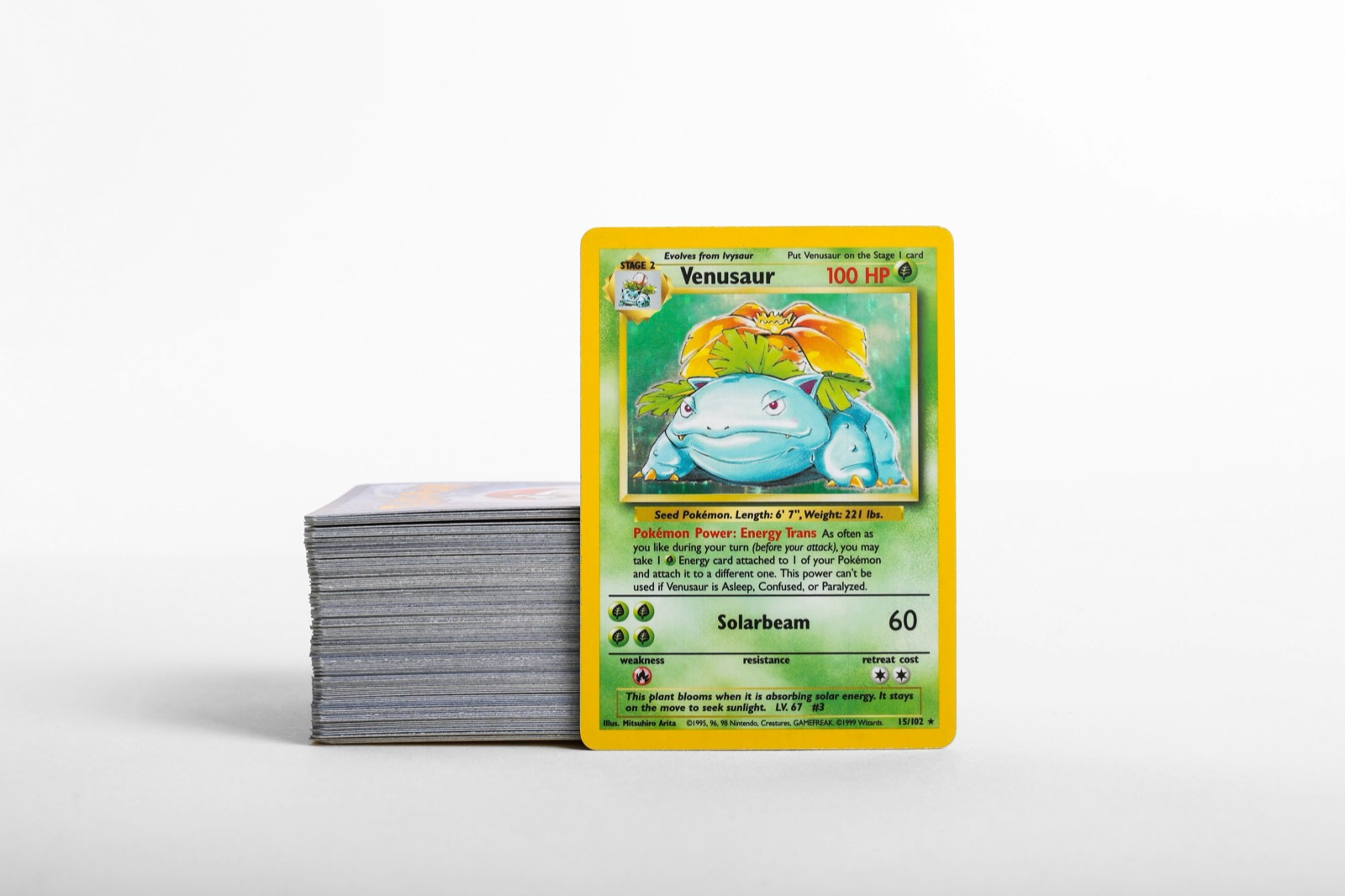
Foil is where Pokemon card value lives
Strip away the foil from a Pokemon set and most of the value goes with it. The shiny cards are the chase cards, and over 25 years the Pokemon TCG has invented a growing zoo of foil patterns — flat holo, reverse holo, cosmos sparkle, cracked ice, and the heavily textured foils on modern rares. Two cards of the exact same Pokemon and set number can be worth wildly different amounts purely because of which foil pattern they carry.
That makes foil literacy a core collecting skill. If you can name the pattern in front of you, you can usually narrow down the rarity, the era, and the value bracket before you even check a price.
The two foundations: holo and reverse holo
Almost every foil card descends from one of two ideas, and getting these straight first makes everything else easy.
The foundation:
- Regular holo: only the artwork window shimmers; the rest of the card is matte
- Reverse holo: the opposite — everything except the artwork window shimmers
- Holo cards are the classic chase rares of a set
- Reverse holos are a parallel "shiny" version of commons, uncommons, and rares, printed at a set rate per pack
The quick test is to ask where the shine is. Shine in the picture only means holo; shine everywhere but the picture means reverse holo. The Pokemon card rarity symbols guide and how to read Pokemon card set symbols and numbers guides cover the symbols that pair with each foil type to confirm rarity.
The classic holo patterns
Within "holo," the actual sparkle pattern has changed over the years, and the pattern is a strong clue to which era a card is from.
The patterns worth knowing:
- Cosmos holo: a starry, galaxy-like sparkle, the classic vintage and modern default
- Cracked ice: a shattered-glass pattern used in certain older sets
- Crosshatch and tinsel: linear, sweeping foil patterns from specific eras
- Mirror and water-web reverse holos: distinctive reverse-foil textures tied to particular sets
These patterns rarely change a card's official rarity, but they matter to set-specific collectors and can affect demand for a particular printing. The Pokemon card vintage vs modern guide explains how foil patterns help date a card to its era.
The modern textured foils
Modern Pokemon sets pushed foil into texture you can feel with a fingertip, and these textured patterns sit at the top of the rarity ladder.
The high-end modern foils:
- Full art cards with foil extending across the entire card face
- Secret rares and rainbow rares with heavy, colorful textured foil
- Special illustration rares with premium art and pronounced texture
- Trainer gallery cards with their own distinct foil treatment
These are the cards that carry the biggest premiums in modern sets, and the texture itself is part of the appeal. The Pokemon card full art guide, Pokemon card secret rare guide, Pokemon card rainbow rare guide, and Pokemon card special illustration rare guide cover each of these foil tiers in depth.
Why foil type changes value so much
Because foil pattern often maps directly to rarity tier, it is one of the fastest signals of what a card is worth. A reverse holo common is a minor bonus; a textured secret rare of the same Pokemon can be a chase card worth many times more.
What foil tells you about value:
- Higher, more textured foils generally sit higher on the rarity ladder
- The same Pokemon can exist as a common, a holo, and a secret rare at very different prices
- Foil cards are also more prone to certain condition issues, which affects grading
- Collectors chasing master sets need every foil variant, driving demand for each one
Since foil type can multiply a card's value, always confirm the exact printing before buying or selling. Use a Pokemon card price checker to separate the foil variants, and the how to tell if a Pokemon card is valuable guide to weigh foil tier alongside condition and demand.
Foil cards and condition
Foil surfaces are less forgiving than matte ones. They show fingerprints, scratch more visibly, and modern textured cards are prone to surface lines and indentations that flat cards shrug off.
What to watch for:
- Fingerprints and clouding on the foil surface, especially on full arts
- Scratches that catch the light across the holo area
- Surface lines and dents that the texture makes easier to see, not harder
- Foil peeling or bubbling on older or mishandled cards
The Pokemon card surface damage guide and how to inspect Pokemon cards before you buy guides cover the angled-light inspection that reveals foil-specific defects before they cost you a grade.
The simple rule
Foil pattern is one of the strongest value signals on a Pokemon card. Learn the two foundations first — holo shines in the art, reverse holo shines everywhere else — then layer on the classic patterns like cosmos and the modern textured foils that top the rarity ladder. Name the foil, narrow the rarity, then confirm the exact printing against real comps. Once you read foil fluently, the value of a card is half-answered before you ever look up a price.