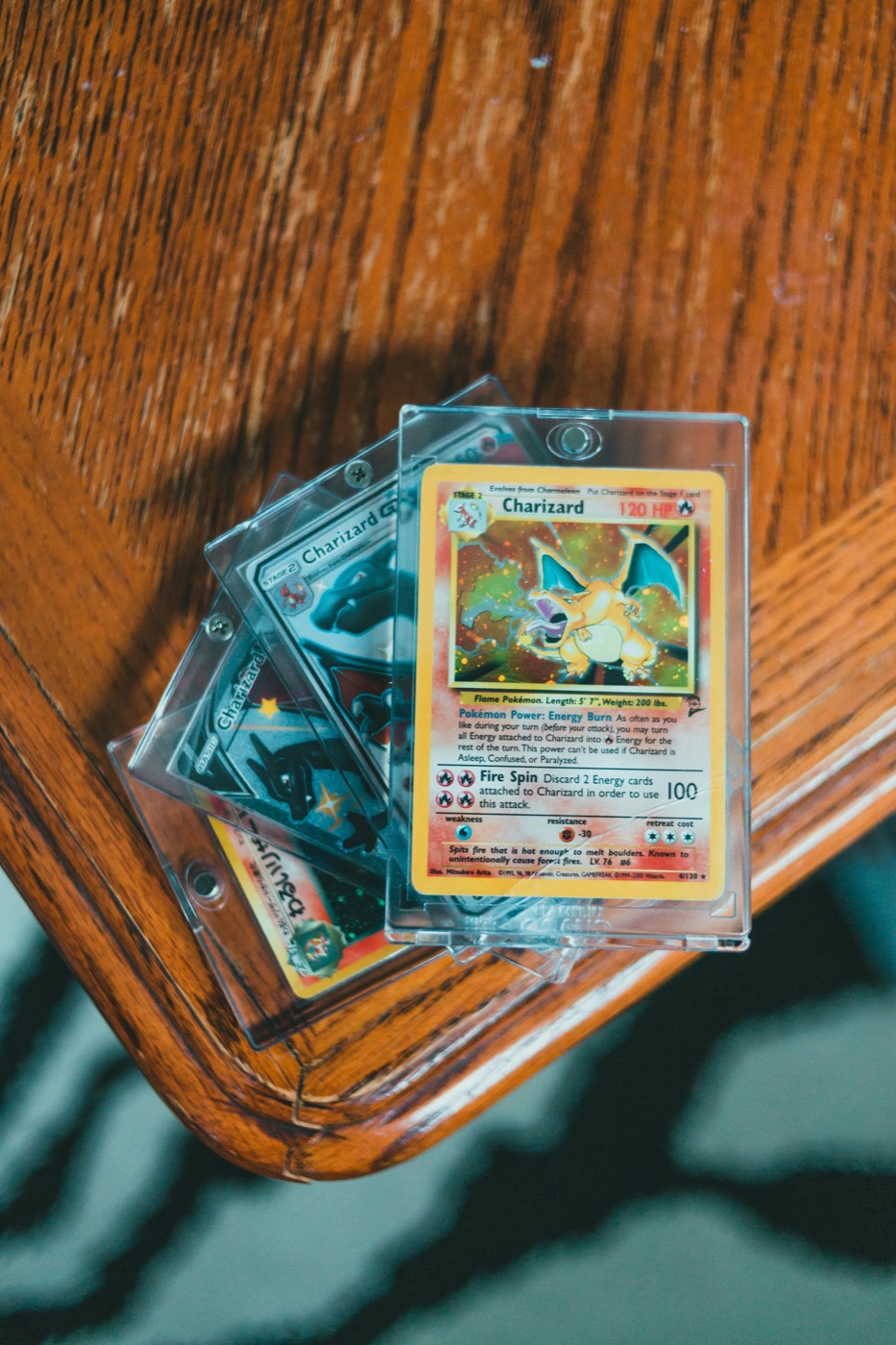
Heat is slow, invisible, and cumulative
Most condition issues collectors think about — bent corners, scratched surfaces, edge nicks — show up in a single moment of bad handling. Heat damage is different. It accumulates over weeks and months, often invisibly, and shows itself once a card is already permanently warped, faded, or peeling.
A Pokemon card heat damage guide is really a guide to two things: keeping cards out of obvious heat sources, and recognizing the less obvious ones — a sunny shelf, a closet against an exterior wall, a parked car at a show — before they cost you condition you cannot recover.
What heat actually does to a Pokemon card
Pokemon cards are layered — ink, foil, paper stock, and laminated coatings — and each layer responds to heat differently. Sustained or repeated heat exposure can cause:
- Warping as different layers expand and contract at different rates
- Cupping or curling, especially in holo and foil cards
- Surface print fade, accelerated by any UV alongside heat
- Laminate separation that shows up as bubbling or peeling
- Stiffening or brittleness in the long term as oils and binders dry out
The Pokemon card light damage guide and Pokemon card humidity guide cover the two related stressors that almost always travel alongside heat — sunlight is usually a heat source too, and warm rooms often swing humidity unpredictably.
The danger zones most collectors miss
Obvious heat sources — a stove, a radiator, a space heater — rarely catch experienced collectors out. The damaging spots are usually mundane:
- A shelf above a TV, console, or amplifier
- A closet shared with a hot water tank or furnace
- A binder left in a sunlit room while you are out
- The back seat or trunk of a car on a show day
- A delivery truck during a summer heatwave
- An attic or garage used as overflow storage
- A box sitting against a south-facing exterior wall
The cards in any of these spots may look fine for months, then suddenly show warp or fade after one bad week — the damage was building the whole time.
The how to store Pokemon cards and Pokemon card storage temperature guide cover the broader storage-environment principles; this guide focuses on what heat specifically does and where it specifically attacks.
Temperature ranges to actually plan against
You do not need a lab. You need a stable room that stays in the same broad range a person would find comfortable, year-round.
Practical targets:
- A comfortable room temperature for humans is also comfortable for cards
- Sustained exposure well above that range — think a hot attic or a parked car — should be treated as actively damaging
- Short transit moments through warm conditions are usually fine
- Repeated cycles between hot and cool are worse than any single static temperature
The Pokemon card storage box guide and Pokemon card binder guide cover the storage formats that buffer cards against small swings — they help, but they are not a substitute for a stable room.
Why cars are uniquely dangerous
A parked car can reach temperatures dramatically higher than the air outside, even on a moderately warm day. That is bad for Pokemon cards specifically because:
- The dashboard area can scorch surfaces in a single afternoon
- Even the trunk gets significantly hotter than ambient
- Repeated heat cycles in a car kill cards faster than a static hot room
- UV through windows adds light damage on top of the heat damage
- The cabin cools much faster than it warms, multiplying the swing
If you take cards to shows, the Pokemon card show prep checklist and Pokemon card show buying checklist are worth pairing with a hard rule: cards never stay in the car as a buffer between venue and home. They go in with you, or they go home first.
Shipping in summer
Outgoing and incoming shipments are often where collectors lose cards to heat without realizing it.
To protect cards in transit:
- Avoid scheduling shipments to sit in distribution centers over hot weekends
- Use rigid mailers and proper sleeving — they buffer brief heat exposure too
- For very valuable cards, time shipments to expected delivery windows
- Bring deliveries inside quickly during heatwaves
- For buyers, inspect cards for any new warp after summer-delivered packages
The how to ship Pokemon cards safely and how to log Pokemon card mail day guides cover the packing standard and the post-arrival inspection that catches transit-induced damage early.
Display setups that quietly cook cards
A glass-fronted display in a sunny living room is one of the most common slow-cooker setups in the hobby.
If you display cards or slabs, check:
- Whether direct sunlight reaches the display at any time of day
- Whether the display sits above or near a heat-generating appliance
- Whether the room temperature itself swings dramatically across the day
- Whether the display can be relocated to a more stable interior wall
The how to display Pokemon cards without damaging them and Pokemon card display case guide cover display setups that minimize light damage; the same setups help against heat when they are placed thoughtfully.
Inspecting for early heat damage
Heat damage starts subtle. Build the habit of checking for:
- Slight cupping or curling along the long edge of foils
- A new wave or warp where the card used to lie flat
- Faded colors compared to a known-good copy
- Soft, almost rubbery feel where the card used to be crisp
- Tiny bubbles or lift in the surface laminate
The how to do a Pokemon card collection audit, Pokemon card edge wear guide, and Pokemon card surface damage guide guides cover the broader periodic-inspection routine — heat issues fold into the same checks.
What to do when you find heat-stressed cards
Once heat damage is visible, the card cannot be returned to its original state — but you can stop the damage from progressing.
Sensible steps:
- Move the card and its neighbors out of the heat source immediately
- Re-sleeve and re-house in a more protective format if needed
- Note the damage in your records so it never becomes a surprise in a sale
- Reassess display, storage, and transport routines that caused the issue
- Avoid stacking weight on warped cards while they remain flexible
The Pokemon card insurance inventory guide and Pokemon card collection backup guide ensure the damage is documented for both insurance and future sale purposes.
A short heat-safety checklist
For storage:
- Is every storage spot inside the home's normal heated-and-cooled envelope?
- Is the room free of direct sunlight on the cards at every time of day?
- Are the cards away from electronics, appliances, and exterior walls that get hot?
- Is the temperature stable across seasons, not just on the day you check?
For transport and travel:
- Are cards never left in a parked car as a holding spot?
- Are shipping windows planned around heatwaves where possible?
- Are show-bound cards returned to safe storage on the same day?
The simple rule
Heat damages Pokemon cards quietly, cumulatively, and permanently. The fix is environmental, not heroic — keep storage in a stable interior room, keep displays out of sunlight and away from heat sources, and treat cars and hot transit windows as no-go zones for anything you actually care about. Collections that age cleanly are almost always the ones whose storage environment looks the same on a hot August afternoon as it does in the middle of winter.