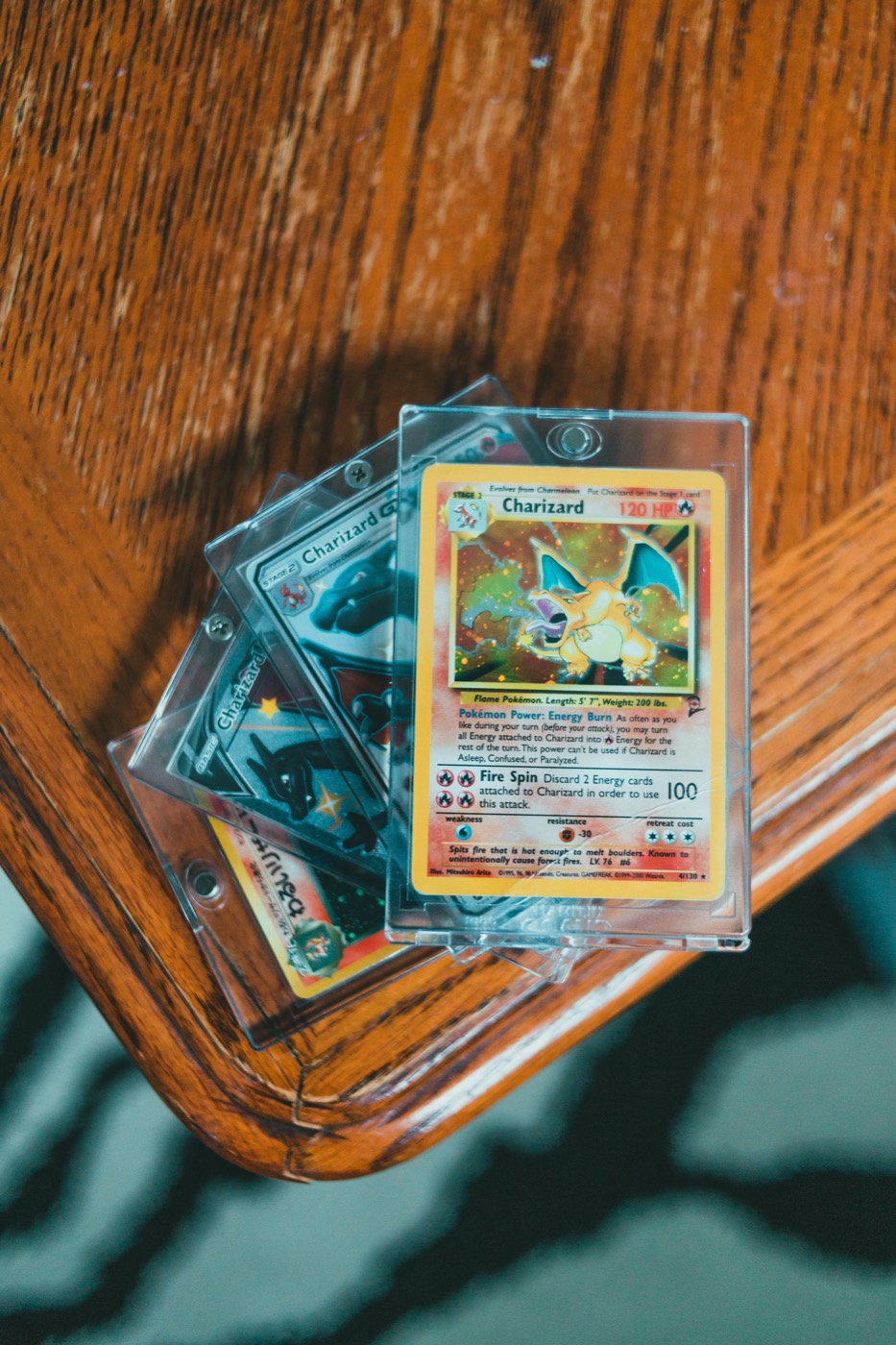
Foil curl is a storage signal
Pokemon card foil curl happens when a card bends because its layers react differently to moisture, temperature, or storage pressure. Holo cards, reverse holos, full arts, and textured cards can show curl more clearly than normal bulk because the foil layer behaves differently from paper stock.
A little curve is common. Strong curl can make a card harder to display, sleeve, sell, or grade confidently.
Why holo Pokemon cards curl
Foil cards are layered objects. When humidity changes, those layers can expand or contract unevenly. That tension creates a curve. Heat, dry rooms, damp rooms, poor storage, and long periods in loose stacks can all make the problem more noticeable.
The card may curl inward, outward, or along one axis depending on the environment and the card construction.
What collectors should check
When inspecting a curled card, look beyond the curve itself:
- Is the card otherwise clean?
- Are corners lifting?
- Is there whitening from pressure?
- Does the card sit safely in a sleeve?
- Does the curl create binder pressure?
- Is the surface scratched from storage?
If curl appears with moisture staining, waviness, or softened edges, use the water damage guide and humidity guide before treating it as a simple storage issue.
Can you flatten a curled Pokemon card?
Collectors often want a quick fix, but aggressive flattening can create dents, surface pressure, or corner damage. The safer goal is usually to stabilize storage, not force the card flat overnight.
Avoid:
- Heat
- Direct sunlight
- Heavy uneven pressure
- Damp methods
- Tight binders that squeeze the card
If a valuable card is curled, handle it conservatively. A sleeve plus appropriate rigid protection is safer than experimental fixes.
How to reduce future foil curl
The best prevention is stable storage. Keep cards in a cool, dry room, avoid garages and cars, and use storage that supports the card without over-compressing it.
For important cards:
- Sleeve before binder or rigid storage
- Avoid overfilled binder pages
- Store sealed and raw cards away from humidity swings
- Check high-value foils periodically
- Keep duplicates separated if condition matters
The storage guide and sleeve types guide cover the broader protection workflow.
Does foil curl affect value?
It can. Mild curl on a modern holo may not matter much if the card is otherwise clean. Strong curl can reduce buyer confidence, especially when photos make the card look warped or when the card is being sold as a grading candidate.
If you are selling, disclose the curl and include a side-angle photo. If you are buying, ask whether the card lays flat enough for your intended use.
Track curl and storage notes
Foil curl can change over time. If a card matters to your collection, record the condition note and storage location so you know whether the issue improved, stayed stable, or got worse.
A Pokemon collection app helps connect condition notes, photos, and storage decisions to the exact card copy.
The simple rule
Pokemon card foil curl is usually an environment and storage issue. Stabilize the card, avoid aggressive flattening tricks, disclose the condition when selling, and store holo cards in a way that reduces future humidity and pressure swings.