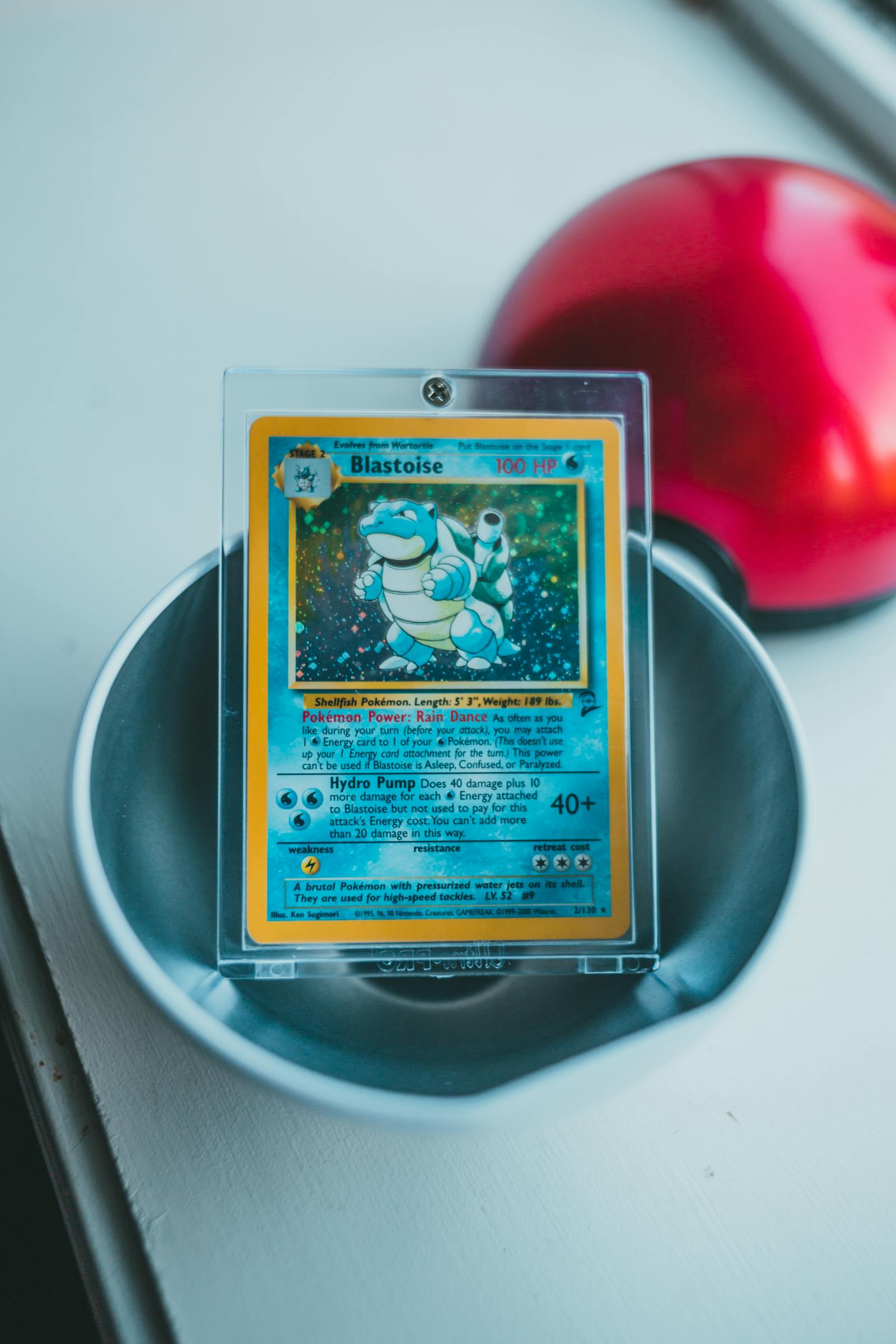
Raw and graded prices are not the same market
Collectors get into trouble when they compare a raw Pokemon card to a clean PSA 10 listing and treat the gap as guaranteed profit. Raw cards, lower-grade slabs, and high-grade slabs behave like related markets, not identical ones.
The goal is not to find the biggest number. The goal is to understand which lane your card actually belongs in before you buy, sell, trade, or submit it for grading.
Confirm the exact card first
Start with identity before price. A raw card from one set cannot be compared to a graded card from a different print, language, promo release, or variant.
Check:
- card name
- set and collector number
- language
- holo or reverse holo status
- promo or stamped variant
- raw, graded, or sealed context
If identity is still uncertain, use the Pokemon card scanner or the Pokemon card database guide before reading any market signal.
Grade premium only matters after condition
A graded price is partly the card and partly the opinion of condition. That means a PSA 10 price is not the right comparison for a raw copy with whitening, scratches, dents, print lines, or weak centering.
Before comparing raw and graded prices, place your copy in a realistic condition lane. The Pokemon card condition guide and centering guide help here because they force you to look at the same flaws a buyer or grader will care about later.
Compare multiple graded lanes
Do not stop at the highest grade. A practical comparison looks at several lanes:
- raw near mint sales
- raw played or lightly played sales
- PSA 9 or equivalent slabs
- PSA 10 or equivalent slabs
- sold listings, not only active asks
If the jump from raw to a moderate grade is small, grading may not solve anything. If only the perfect grade has a meaningful premium, the submission decision becomes much riskier.
Include fees, time, and liquidity
The graded price is not your net result. Submission fees, shipping, insurance, sales platform fees, and waiting time all reduce the useful spread. Liquidity matters too. A raw card may sell quickly while a lower-grade slab sits for weeks.
For a card you already own, the question is: does grading create enough extra value after costs and risk? For a card you are buying, the question is: are you paying raw price for a realistic raw card, or paying as if a high grade is already guaranteed?
Watch for population and hype traps
Some cards have a large graded population. Others are thin enough that one sale can distort expectations. Recent hype, set anniversaries, tournament attention, and social posts can also pull graded prices away from raw prices temporarily.
Use the Pokemon card price history guide when the chart looks jumpy. A steady premium is more useful than one dramatic sale.
Use the comparison to choose the next action
Raw versus graded pricing should lead to a decision:
- keep raw and protect the card
- sell raw while demand is strong
- submit only the cleanest copies
- buy a slab instead of gambling on a raw copy
- avoid a trade where the other side prices raw as guaranteed grade 10
If the comparison does not change the action, it is probably just noise.
The simple rule
Compare raw and graded Pokemon card prices by matching the exact card, judging condition honestly, checking several grade lanes, and subtracting costs before you assume upside. The best comparison is not raw versus the highest slab. It is your actual card versus the realistic lane it can reach.
If you are still deciding which copies deserve submission space, continue with how to choose which Pokemon cards to grade first.